


- Afhalen na 1 uur in een winkel met voorraad
- Gratis thuislevering in België vanaf € 30
- Ruim aanbod met 7 miljoen producten
- Afhalen na 1 uur in een winkel met voorraad
- Gratis thuislevering in België vanaf € 30
- Ruim aanbod met 7 miljoen producten




€ 112,95
+ 225 punten
Uitvoering
Omschrijving
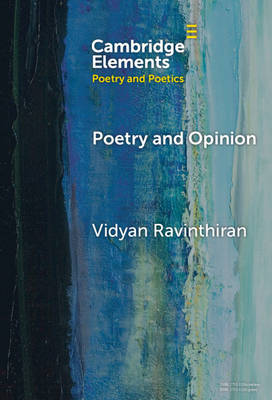
Identifying ourselves, others, writers, with their opinions--and taking the form of the opinion as the epitome of political engagement--we assert a picture of the self that ought to be scrutinized. Mass print generated, along with the railways, telegraph, information-relays national and global, as well as the development of specialized forms of technological, scientific, economic, and medical knowledge, a sea of discourse belying any vision of a cogent public sphere: disinformation is not a purely 21st century, internet phenomenon. Poetry helps us understand this situation. Appearing in verse, claims about reality have been characterized, or have self-characterized, as virtual. As such, Romantic and post-Romantic poetry makes perceptible other ways in which, in other precincts, utterance becomes virtualized. Sometimes, by the psychological turbulences of the citizen-as-creature, appropriating world events to the need to self-assert; sometimes, as a result of affective matrices that challenge the idea that we are the authors of our own opinions.
Specificaties
Betrokkenen
- Auteur(s):
- Uitgeverij:
Inhoud
- Aantal bladzijden:
- 92
- Taal:
- Engels
- Reeks:
Eigenschappen
- Productcode (EAN):
- 9781009549059
- Verschijningsdatum:
- 23/04/2026
- Uitvoering:
- Hardcover
- Formaat:
- Genaaid
- Afmetingen:
- 152 mm x 229 mm
- Gewicht:
- 294 g


Alleen bij Standaard Boekhandel
+ 225 punten op je klantenkaart van Standaard Boekhandel
Cadeau

AANGERADEN


Beoordelingen
We publiceren alleen reviews die voldoen aan de voorwaarden voor reviews. Bekijk onze voorwaarden voor reviews.