


- Afhalen na 1 uur in een winkel met voorraad
- Gratis thuislevering in België vanaf € 30
- Ruim aanbod met 7 miljoen producten
- Afhalen na 1 uur in een winkel met voorraad
- Gratis thuislevering in België vanaf € 30
- Ruim aanbod met 7 miljoen producten





Omschrijving
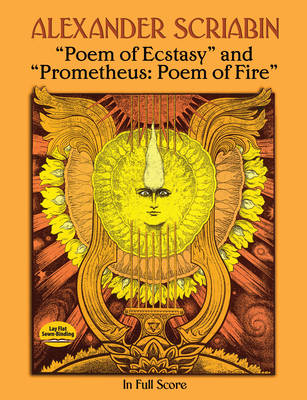
In the early years of the twentieth century, when vital new forces were revolutionizing the arts, Russian-born Alexander Scriabin (1872-1915) was among the visionary pioneers who sought a new musical language. Scriabin began the process of a complete break with all musical conventions at least a decade before the advances of Stravinsky and Schoenberg. By 1905 he was immersed in a search for a way to express, in sound, his obsession with mystical and theosophical ideals.
Scriabin's last two orchestral works were the products of a virtual delirium of composing. Simultaneously refining his collection of verses called "Poem of Ecstasy" and the related symphony, Scriabin never forgot the rapture of composing this work about creation and self-fulfillment: "I gasp for breath, but oh, what bliss! The very meter kindles the meaning..."
"Prometheus: Poem of Fire," Scriabin's last and most revolutionary symphony, portrays humanity's epic journey from the beginning of time to the wondrous self-realization that followed the gift of fire and light, which made creative vision possible. Massively scored, "Prometheus" incorporates a "color organ" to bathe the performance space in a vast interplay of colored lights.
For the music professional and every student of composition, orchestration, and conducting, both scores are strikingly original and instructive. Equally fascinating are Scriabin's approach to composition, the extraordinary sonorities of his orchestra, and his fanciful, often supercharged performance instructions that replace conventional words for tempo, mood, and expression.
Scriabin's last two orchestral works were the products of a virtual delirium of composing. Simultaneously refining his collection of verses called "Poem of Ecstasy" and the related symphony, Scriabin never forgot the rapture of composing this work about creation and self-fulfillment: "I gasp for breath, but oh, what bliss! The very meter kindles the meaning..."
"Prometheus: Poem of Fire," Scriabin's last and most revolutionary symphony, portrays humanity's epic journey from the beginning of time to the wondrous self-realization that followed the gift of fire and light, which made creative vision possible. Massively scored, "Prometheus" incorporates a "color organ" to bathe the performance space in a vast interplay of colored lights.
For the music professional and every student of composition, orchestration, and conducting, both scores are strikingly original and instructive. Equally fascinating are Scriabin's approach to composition, the extraordinary sonorities of his orchestra, and his fanciful, often supercharged performance instructions that replace conventional words for tempo, mood, and expression.
Specificaties
Betrokkenen
- Auteur(s):
- Uitgeverij:
Inhoud
- Aantal bladzijden:
- 208
- Taal:
- Engels
- Reeks:
Eigenschappen
- Productcode (EAN):
- 9780486284613
- Verschijningsdatum:
- 18/02/2015
- Formaat:
- Ongenaaid / garenloos gebonden
- Afmetingen:
- 238 mm x 308 mm
- Gewicht:
- 603 g


Alleen bij Standaard Boekhandel
+ 63 punten op je klantenkaart van Standaard Boekhandel
Cadeau

AANGERADEN


Beoordelingen
We publiceren alleen reviews die voldoen aan de voorwaarden voor reviews. Bekijk onze voorwaarden voor reviews.