



Je cadeautjes zeker op tijd in huis hebben voor de feestdagen? Kom langs in onze winkels en vind het perfecte geschenk!
- Afhalen na 1 uur in een winkel met voorraad
- Gratis thuislevering in België vanaf € 30
- Ruim aanbod met 7 miljoen producten
Je cadeautjes zeker op tijd in huis hebben voor de feestdagen? Kom langs in onze winkels en vind het perfecte geschenk!
- Afhalen na 1 uur in een winkel met voorraad
- Gratis thuislevering in België vanaf € 30
- Ruim aanbod met 7 miljoen producten





€ 161,45
+ 322 punten
Uitvoering
Omschrijving
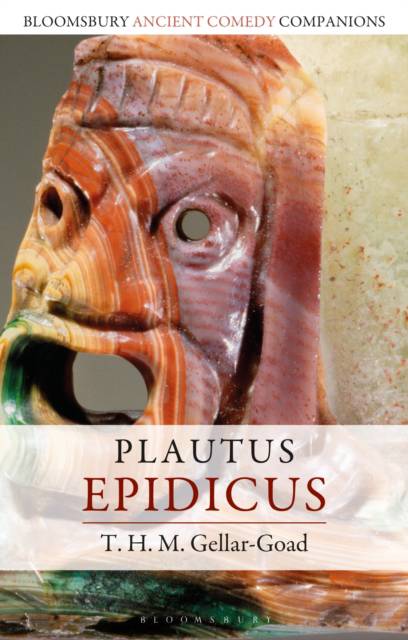
Plautus' comedy Epidicus has the most convoluted, complicated and recursive plot in all known ancient Greek and Roman literature - despite being shorter than all but two other plays that survive in full from ancient drama. The play is filled with doubles and triples: two soldiers, three lyre-players, two love objects, two old men, two young men, three deception plots and three pairs of scenes where one person momentously recognizes - or momentously doesn't recognize - someone else.
Open up and read on to untwist the knots of plot, character, humor and culture that Plautus' Epidicus has tied into tangles. In four trenchant, comprehensive, yet reader-friendly chapters, including the first complete study of the play's afterlife from Plautus to today, you will explore Epidicus as a case study in ancient Roman playwrighting; a source for insights about ancient Roman society; and a fruitful challenge for readers, actors, spectators and directors alike. Whereas many previous interpretations of the play have focused on questions about Greek models, compression, deletion, maladaptation or careless composition by Plautus, T. H. M. Gellar-Goad instead uses a focus on performance, lifecycles and story-cycles, and social issues to make Epidicus make sense in its own right.
Open up and read on to untwist the knots of plot, character, humor and culture that Plautus' Epidicus has tied into tangles. In four trenchant, comprehensive, yet reader-friendly chapters, including the first complete study of the play's afterlife from Plautus to today, you will explore Epidicus as a case study in ancient Roman playwrighting; a source for insights about ancient Roman society; and a fruitful challenge for readers, actors, spectators and directors alike. Whereas many previous interpretations of the play have focused on questions about Greek models, compression, deletion, maladaptation or careless composition by Plautus, T. H. M. Gellar-Goad instead uses a focus on performance, lifecycles and story-cycles, and social issues to make Epidicus make sense in its own right.
Specificaties
Betrokkenen
- Auteur(s):
- Uitgeverij:
Inhoud
- Aantal bladzijden:
- 184
- Taal:
- Engels
- Reeks:
Eigenschappen
- Productcode (EAN):
- 9781350416222
- Verschijningsdatum:
- 11/12/2025
- Uitvoering:
- Hardcover
- Formaat:
- Genaaid
- Afmetingen:
- 140 mm x 216 mm
- Gewicht:
- 358 g


Alleen bij Standaard Boekhandel
+ 322 punten op je klantenkaart van Standaard Boekhandel
CADEAU


Beoordelingen
We publiceren alleen reviews die voldoen aan de voorwaarden voor reviews. Bekijk onze voorwaarden voor reviews.