


- Afhalen na 1 uur in een winkel met voorraad
- Gratis thuislevering in België vanaf € 30
- Ruim aanbod met 7 miljoen producten
- Afhalen na 1 uur in een winkel met voorraad
- Gratis thuislevering in België vanaf € 30
- Ruim aanbod met 7 miljoen producten





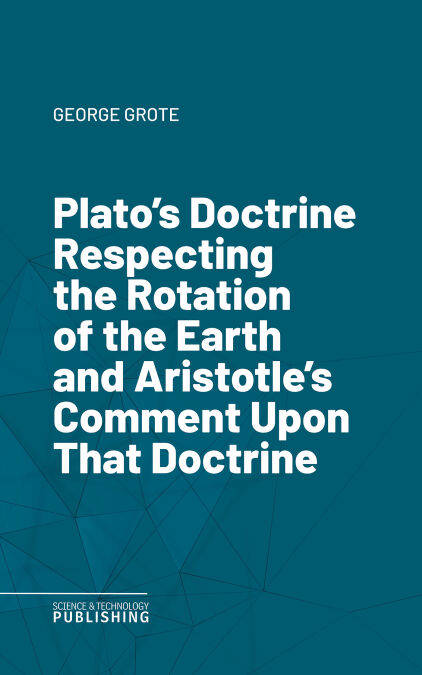
Plato's Doctrine Respecting the Rotation of the Earth and Aristotle's Comment Upon That Doctrine E-BOOK
Grote
E-book | Engels
€ 19,99
+ 19 punten
Omschrijving
Plato's Doctrine Respecting the Rotation of the Earth and Aristotle's Comment Upon That Doctrine is a scholarly treatise that delves into the ancient philosophical debate concerning the motion of the Earth, focusing on the perspectives of two of history’s most influential thinkers: Plato and Aristotle. Drawing from classical sources, the book meticulously examines Plato’s suggestion that the Earth might rotate on its axis, a concept that was revolutionary for its time and prefigured later astronomical discoveries. The author explores the textual evidence from Plato’s dialogues, particularly the Timaeus, analyzing the language and context to determine whether Plato truly advocated for a rotating Earth or if his statements have been misinterpreted by later commentators. The work then transitions to Aristotle’s critical response, as found in his treatises such as De Caelo (On the Heavens). Aristotle’s arguments against the rotation of the Earth are presented in detail, including his reasoning based on observation, natural philosophy, and the prevailing cosmological models of the era. The book highlights the intellectual interplay between teacher and student, showing how Aristotle’s systematic approach led him to reject Plato’s tentative hypothesis in favor of a geocentric, stationary Earth. Throughout, the author provides historical context, tracing how these early discussions influenced subsequent scientific thought and the eventual development of heliocentric theories. The text is rich with references to ancient manuscripts, commentaries, and the broader philosophical milieu of classical Greece. It serves as both a historical analysis and a philosophical inquiry, offering readers insight into the evolution of ideas about the cosmos and the enduring legacy of Plato and Aristotle in the history of science. This book is an essential resource for students of philosophy, history of science, and anyone interested in the origins of astronomical thought.
Specificaties
Betrokkenen
- Auteur(s):
- Uitgeverij:
Inhoud
- Taal:
- Engels
Eigenschappen
- Productcode (EAN):
- 9782528108932
- Verschijningsdatum:
- 31/08/2025
- Uitvoering:
- E-book
- Formaat:
- ePub


Alleen bij Standaard Boekhandel
+ 19 punten op je klantenkaart van Standaard Boekhandel

Beoordelingen
We publiceren alleen reviews die voldoen aan de voorwaarden voor reviews. Bekijk onze voorwaarden voor reviews.