


- Afhalen na 1 uur in een winkel met voorraad
- Gratis thuislevering in België vanaf € 30
- Ruim aanbod met 7 miljoen producten
- Afhalen na 1 uur in een winkel met voorraad
- Gratis thuislevering in België vanaf € 30
- Ruim aanbod met 7 miljoen producten





Omschrijving
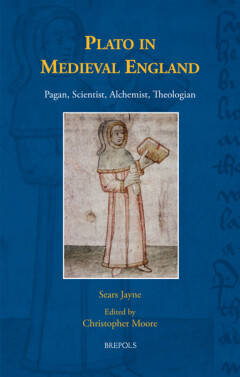
From the time of the Roman Republic, continental Europeans traveling to England brought knowledge of Greek and Roman intellectual culture in the form of books of every genre. But, until 1111 CE, the island contained not a single Platonic dialogue. And for the next two centuries, it had only a partial Latin translation of the Timaeus. A Latin Phaedo eventually appeared, in 1340, and the Meno in 1423. But this hardly limited the number of ideas people had about Plato. He was a proto-Christian, a sage, a scholar of the cosmos, and a healer. And he had an elaborate oeuvre that did exist in England, works of astrology, numerology, medicine, and science, including Cado, Theobrodus, Calf, Circle, Herbal, Question, Alchemy, and Book of Prophecies of a Greek King. This book tells the story of Plato in Medieval England, from a name with too few works to a sage with too many. Based on a complete survey of all extant manuscripts, publications, and library records until the fifteenth century, it traces with extraordinary precision the movement of opinions and information about Plato from Europe to England and then into its various monasteries, schools, and universities. This erudite and illuminating sociology of knowledge provides novel insight into the dubious English career of our best-known philosopher. This is intellectual history and reception studies at its most surprising.
Specificaties
Betrokkenen
- Auteur(s):
- Uitgeverij:
Inhoud
- Aantal bladzijden:
- 400
- Taal:
- Engels
- Reeks:
- Reeksnummer:
- nr. 37
Eigenschappen
- Productcode (EAN):
- 9782503601083
- Verschijningsdatum:
- 8/02/2024
- Uitvoering:
- Hardcover
- Formaat:
- Genaaid
- Gewicht:
- 797 g


Alleen bij Standaard Boekhandel
+ 233 punten op je klantenkaart van Standaard Boekhandel
AANGERADEN


Beoordelingen
We publiceren alleen reviews die voldoen aan de voorwaarden voor reviews. Bekijk onze voorwaarden voor reviews.