



Bedankt voor het vertrouwen het afgelopen jaar! Om jou te bedanken bieden we GRATIS verzending (in België) aan op alles gedurende de hele maand januari.
- Afhalen na 1 uur in een winkel met voorraad
- In januari gratis thuislevering in België
- Ruim aanbod met 7 miljoen producten
Bedankt voor het vertrouwen het afgelopen jaar! Om jou te bedanken bieden we GRATIS verzending (in België) aan op alles gedurende de hele maand januari.
- Afhalen na 1 uur in een winkel met voorraad
- In januari gratis thuislevering in België
- Ruim aanbod met 7 miljoen producten





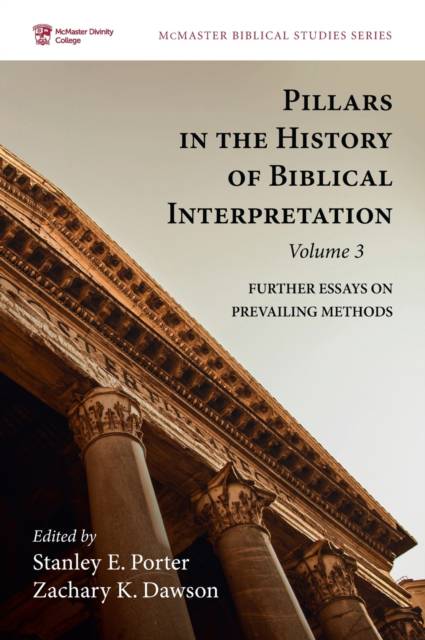
Pillars in the History of Biblical Interpretation, Volume 3
Further Essays on Prevailing Methods
€ 111,45
+ 222 punten
Omschrijving
This third volume, like its predecessors, adds to the growing body of literature concerned with the history of biblical interpretation. With eighteen essays on nineteen biblical interpreters, volume 3 expands the scope of scholars, both traditional and modern, covered in this now multivolume series. Each chapter provides a biographical sketch of its respective scholar(s), an overview of their major contributions to the field, explanations of their theoretical and methodological approaches to interpretation, and evaluations and applications of their methods. By focusing on the contexts in which these scholars lived and worked, these essays show what defining features qualify these scholars as "pillars" in the history of biblical interpretation. While identifying a scholar as a "pillar" is somewhat subjective, this volume defines a pillar as one who has made a distinctive contribution by using and exemplifying a clear method that has pushed the discipline forward, at least within a given context and time period. This volume is ideal for any class on the history of biblical interpretation and for those who want a greater understanding of how the field of biblical studies has developed and how certain interpreters have played a formative role in that development.
Specificaties
Betrokkenen
- Uitgeverij:
Inhoud
- Aantal bladzijden:
- 510
- Taal:
- Engels
- Reeks:
Eigenschappen
- Productcode (EAN):
- 9781725287051
- Verschijningsdatum:
- 7/06/2021
- Uitvoering:
- Hardcover
- Formaat:
- Genaaid
- Afmetingen:
- 178 mm x 254 mm
- Gewicht:
- 1093 g

Alleen bij Standaard Boekhandel
+ 222 punten op je klantenkaart van Standaard Boekhandel
SOLDEN


Beoordelingen
We publiceren alleen reviews die voldoen aan de voorwaarden voor reviews. Bekijk onze voorwaarden voor reviews.