



Bedankt voor het vertrouwen het afgelopen jaar! Om jou te bedanken bieden we GRATIS verzending (in België) aan op alles gedurende de hele maand januari.
- Afhalen na 1 uur in een winkel met voorraad
- In januari gratis thuislevering in België
- Ruim aanbod met 7 miljoen producten
Bedankt voor het vertrouwen het afgelopen jaar! Om jou te bedanken bieden we GRATIS verzending (in België) aan op alles gedurende de hele maand januari.
- Afhalen na 1 uur in een winkel met voorraad
- In januari gratis thuislevering in België
- Ruim aanbod met 7 miljoen producten





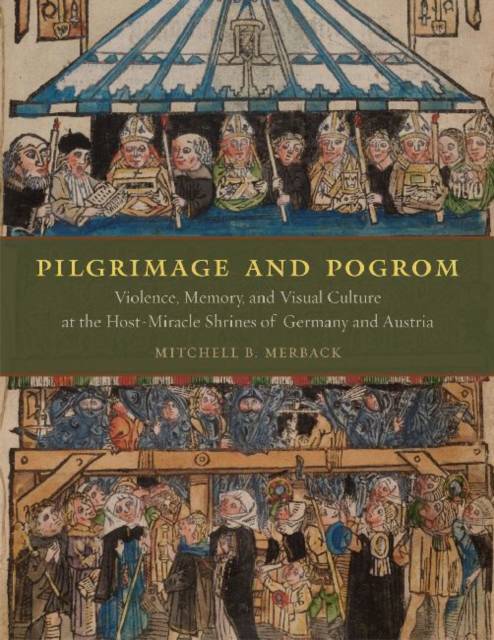
Pilgrimage and Pogrom
Violence, Memory, and Visual Culture at the Host-Miracle Shrines of Germany and Austria
Mitchell B Merback
Hardcover | Engels
€ 87,95
+ 175 punten
Omschrijving
In the late Middle Ages, Europe saw the rise of one of its most virulent myths: that Jews abused the eucharistic bread as a form of anti-Christian blasphemy, causing it to bleed miraculously. The allegation fostered tensions between Christians and Jews that would explode into violence across Germany and Austria. And pilgrimage shrines were built on the sites where supposed desecrations had led to miracles or to anti-Semitic persecutions. Exploring the legends, cult forms, imagery, and architecture of these host-miracle shrines, Pilgrimage and Pogrom reveals how they not only reflected but also actively shaped Christian anti-Judaism in the two centuries before the Reformation. Mitchell B. Merback studies surviving relics and eucharistic cult statues, painted miracle cycles and altarpieces, propaganda broadsheets, and more in an effort to explore how accusation and legend were transformed into propaganda and memory. Merback shows how persecution and violence became interdependent with normative aspects of Christian piety, from pilgrimage to prayers for the dead, infusing them with the ideals of crusade. Valiantly reconstructing the cult environments created for these sacred places, Pilgrimage and Pogrom is an illuminating look at Christian-Jewish relations in premodern Europe.
Specificaties
Betrokkenen
- Auteur(s):
- Uitgeverij:
Inhoud
- Aantal bladzijden:
- 416
- Taal:
- Engels
Eigenschappen
- Productcode (EAN):
- 9780226520193
- Verschijningsdatum:
- 27/03/2013
- Uitvoering:
- Hardcover
- Formaat:
- Genaaid
- Afmetingen:
- 224 mm x 284 mm
- Gewicht:
- 1905 g


Alleen bij Standaard Boekhandel
+ 175 punten op je klantenkaart van Standaard Boekhandel
SOLDEN


Beoordelingen
We publiceren alleen reviews die voldoen aan de voorwaarden voor reviews. Bekijk onze voorwaarden voor reviews.