


- Afhalen na 1 uur in een winkel met voorraad
- Gratis thuislevering in België vanaf € 30
- Ruim aanbod met 7 miljoen producten
- Afhalen na 1 uur in een winkel met voorraad
- Gratis thuislevering in België vanaf € 30
- Ruim aanbod met 7 miljoen producten





€ 68,90
+ 137 punten
Omschrijving
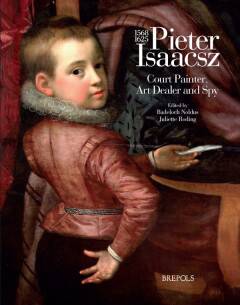
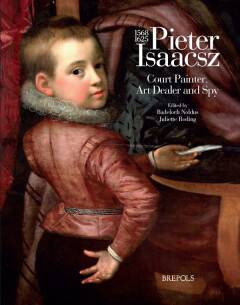
The Danish-born painter of Dutch descent Pieter Isaacsz (1569-1625) represents one of the more colourful figures of early modern art history. He is chiefly known today as a court painter in the service of King Christian IV of Denmark, but he is perhaps even more extraordinary as an art trader, agent of the Dutch States General, and spy in the service of Denmark's arch-enemy, the Swedish Realm. Moreover, Pieter Isaacsz introduced several Netherlandish artists to the Danish court. As a result of his efforts, Pieter Lastman, Adriaen van Nieulandt, Werner van der Valckert and others received assignments from King Christian, making Pieter Isaacsz a bridge builder between the Dutch Republic and Denmark. In sixteen in-depth articles, the authors explore his travels with Hans von Aachen, his years in Rome, Amsterdam and later at the Danish court, his network including Karel van Mander and Hans Vredeman de Vries, the characteristics of his work, his role in international politics, and more. This richly illustrated publication, including an innovative catalogue, contains contributions from Danish, Dutch, German and American scholars, casting a new light on Pieter Isaacsz as the artist of many merits, while at the same time offering a unique insight into Northern European relations in art around 1600. Steffen Heiberg (1945) is director of research at the Museum of National History at Frederiksborg Castle. He is the author of several books on early modern Danish history and culture, including Christian 4. (1988, rev. ed. 2006), Enhj&orningen Corfitz Ulfeldt (1993), and Danske PortrAetter (2003). Badeloch Noldus (1970) is senior researcher at the Museum of National History at Frederiksborg Castle. Her publications include Trade in Good Taste. Relations in Architecture and Culture between the Dutch Republic and the Baltic World in the Seventeenth Century (Brepols 2004) and Your Humble Servant. Agents in Early Modern Europe (Verloren 2006). Juliette Roding (1953) is lecturer in architectural history and scientific coordinator of Pallas, Institute for Art Historical and Literary Studies at Leiden University. She has published widely on Dutch-Danish relations in early modern times, including, with M. Stompe, Pieter Isaacsz (1569-1625). Een Nederlands schilder, kunsthandelaar en diplomaat aan het Deense hof (1569-1625) (Verloren 1997).
Specificaties
Betrokkenen
- Auteur(s):
- Uitgeverij:
Inhoud
- Aantal bladzijden:
- 320
- Taal:
- Engels
Eigenschappen
- Productcode (EAN):
- 9782503524665
- Verschijningsdatum:
- 1/12/2007
- Uitvoering:
- Hardcover
- Formaat:
- Genaaid
- Afmetingen:
- 228 mm x 283 mm
- Gewicht:
- 1664 g


Alleen bij Standaard Boekhandel
+ 137 punten op je klantenkaart van Standaard Boekhandel
Cadeau

AANGERADEN


Beoordelingen
We publiceren alleen reviews die voldoen aan de voorwaarden voor reviews. Bekijk onze voorwaarden voor reviews.