Standaard Boekhandel gebruikt cookies en gelijkaardige technologieën om de website goed te laten werken en je een betere surfervaring te bezorgen.
Hieronder kan je kiezen welke cookies je wilt inschakelen:
Technische en functionele cookies
Deze cookies zijn essentieel om de website goed te laten functioneren, en laten je toe om bijvoorbeeld in te loggen. Je kan deze cookies niet uitschakelen.
Analytische cookies
Deze cookies verzamelen anonieme informatie over het gebruik van onze website. Op die manier kunnen we de website beter afstemmen op de behoeften van de gebruikers.
Marketingcookies
Deze cookies delen je gedrag op onze website met externe partijen, zodat je op externe platformen relevantere advertenties van Standaard Boekhandel te zien krijgt.
Je cadeautjes zeker op tijd in huis hebben voor de feestdagen? Kom langs in onze winkels en vind het perfecte geschenk!
Afhalen na 1 uur in een winkel met voorraad
Gratis thuislevering in België vanaf € 30
Ruim aanbod met 7 miljoen producten
Je cadeautjes zeker op tijd in huis hebben voor de feestdagen? Kom langs in onze winkels en vind het perfecte geschenk!
Je kan maximaal 250 producten tegelijk aan je winkelmandje toevoegen. Verwijdere enkele producten uit je winkelmandje, of splits je bestelling op in meerdere bestellingen.
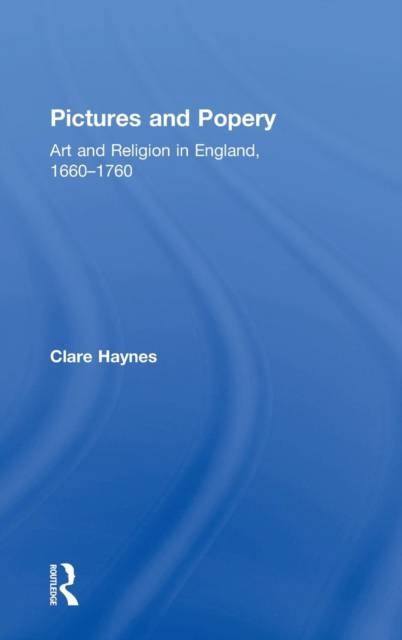
The part religion played in questions of national identity in early modern England is a familiar historical theme, yet little work has been done on how this worked culturally. Nowhere is this more visible than in the seeming contradiction of a militantly Protestant nation such as England, that had a high regard for Catholic art. It is this dichotomy, the tensions between art and anti-Catholicism, that forms the central investigation of this book. During the late seventeenth and eighteenth century, religious art was closely identified with idolatry, and the use of images was one of the most obvious markers of the boundary between Protestantism and Catholicism. This manifested itself in an unease about the status of the religious image in English society, which was articulated in religious tracts, anti-Catholic propaganda, polemical debate, court cases and numerous other places. In light of these attacks upon 'idolatry', the fact that a great deal of Catholic art was so highly regarded and sought after seems puzzling. By discussing English attitudes towards the works of Italian painters (including Raphael, Michelangelo and Domenichino) and the ways in which native artists sought appropriately Protestant ways of emulating them, this volume offers a fascinating perspective on the dichotomy that existed between English appreciation and disapproval of Catholic culture. By taking this cultural and artistic approach and applying it to the broader historical themes, a new and invigorating way of understanding religion and national identity is offered.