


- Afhalen na 1 uur in een winkel met voorraad
- Gratis thuislevering in België vanaf € 30
- Ruim aanbod met 7 miljoen producten
- Afhalen na 1 uur in een winkel met voorraad
- Gratis thuislevering in België vanaf € 30
- Ruim aanbod met 7 miljoen producten





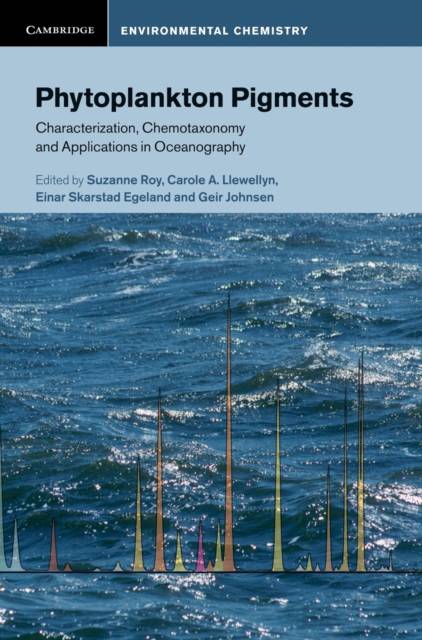
Phytoplankton Pigments
Characterization, Chemotaxonomy and Applications in Oceanography
€ 157,95
+ 315 punten
Omschrijving
Pigments act as tracers to elucidate the fate of phytoplankton in the world's oceans and are often associated with important biogeochemical cycles related to carbon dynamics in the oceans. They are increasingly used in in situ and remote-sensing applications, detecting algal biomass and major taxa through changes in water colour. This book is a follow-up to the 1997 volume Phytoplankton Pigments in Oceanography (UNESCO Press). Since then, there have been many advances concerning phytoplankton pigments. This book includes recent discoveries on several new algal classes particularly for the picoplankton, and on new pigments. It also includes many advances in methodologies, including liquid chromatography-mass spectrometry (LC-MS) and developments and updates on the mathematical methods used to exploit pigment information and extract the composition of phytoplankton communities. The book is invaluable primarily as a reference for students, researchers and professionals in aquatic science, biogeochemistry and remote sensing.
Specificaties
Betrokkenen
- Uitgeverij:
Inhoud
- Aantal bladzijden:
- 890
- Taal:
- Engels
- Reeks:
Eigenschappen
- Productcode (EAN):
- 9781107000667
- Verschijningsdatum:
- 27/10/2011
- Uitvoering:
- Hardcover
- Formaat:
- Genaaid
- Afmetingen:
- 178 mm x 249 mm
- Gewicht:
- 1700 g


Alleen bij Standaard Boekhandel
+ 315 punten op je klantenkaart van Standaard Boekhandel
Cadeau

AANGERADEN


Beoordelingen
We publiceren alleen reviews die voldoen aan de voorwaarden voor reviews. Bekijk onze voorwaarden voor reviews.