


- Afhalen na 1 uur in een winkel met voorraad
- Gratis thuislevering in België vanaf € 30
- Ruim aanbod met 7 miljoen producten
- Afhalen na 1 uur in een winkel met voorraad
- Gratis thuislevering in België vanaf € 30
- Ruim aanbod met 7 miljoen producten





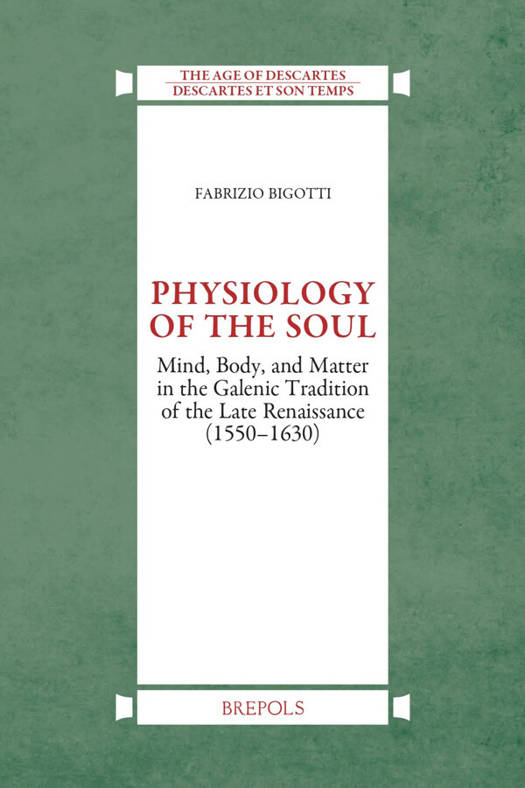
Physiology of the Soul
Mind, Body and Matter in the Galenic Tradition of Late Renaissance (1550-1630)
Fabrizio Bigotti
€ 90,10
+ 180 punten
Omschrijving
In spite of the commonly held opinion according to which Galen's authority was gradually superseded by Vesalius and his followers, a close look at the influence that Galen's psychological works exerted on physicians and philosophers of the early modern period reveals quite a different picture. Not only were Galenists often keen to embrace the new anatomical discoveries, eventually they even contributed to shaping a series of new analytical, practical and experimental tools that started an in-depth transformation of the traditional rationale, with far-reaching and unexpected consequences in domains such as theory of matter, philosophical anthropology and medical experimentation. Through the lens provided by mental disease and its connection to the soul, a new concept of the body and the human animal ultimately emerges: a concept that accompanies the development of early modern ideas on subjectivity and the self.
Specificaties
Betrokkenen
- Auteur(s):
- Uitgeverij:
Inhoud
- Aantal bladzijden:
- 366
- Taal:
- Engels
- Reeks:
- Reeksnummer:
- nr. 3
Eigenschappen
- Productcode (EAN):
- 9782503581613
- Verschijningsdatum:
- 28/11/2019
- Uitvoering:
- Paperback
- Formaat:
- Trade paperback (VS)
- Afmetingen:
- 155 mm x 234 mm
- Gewicht:
- 657 g


Alleen bij Standaard Boekhandel
+ 180 punten op je klantenkaart van Standaard Boekhandel
Cadeau

AANGERADEN


Beoordelingen
We publiceren alleen reviews die voldoen aan de voorwaarden voor reviews. Bekijk onze voorwaarden voor reviews.