


- Afhalen na 1 uur in een winkel met voorraad
- Gratis thuislevering in België vanaf € 30
- Ruim aanbod met 7 miljoen producten
- Afhalen na 1 uur in een winkel met voorraad
- Gratis thuislevering in België vanaf € 30
- Ruim aanbod met 7 miljoen producten





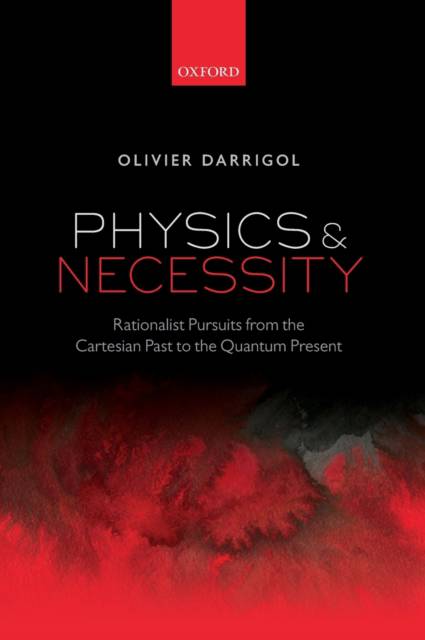
Physics and Necessity
Rationalist Pursuits from the Cartesian Past to the Quantum Present
Olivier Darrigol
Hardcover | Engels
€ 110,45
+ 220 punten
Omschrijving
Can we prove the necessity of our best physical theories by rational means, without appeal to experience? This book recounts a few ingenious attempts to derive physical theories by reason only, beginning with Descartes' geometric construction of the world, and finishing with recent derivations of quantum mechanics from natural axioms. Deductions based on theological, metaphysical, or transcendental arguments are worth remembering for the ways they motivated and structured physical theory, even though we would now criticize their excessive confidence in the power of the mind. Other deductions more modestly relied on criteria for the comprehensibility of nature, including forms of measurability, causality, homogeneity, and correspondence. The central thesis of this book is that such criteria, when properly applied to idealized systems, effectively determine some of our most important theories as well as the mathematical character of the laws of physics. The relevant arguments are not purely rational, because only experience can tell us to which extent nature is comprehensible in a given way. Nor do they block the possibility of ever more varied forms of comprehensibility. They nonetheless suggest the inevitability of much of our theoretical physics.
Specificaties
Betrokkenen
- Auteur(s):
- Uitgeverij:
Inhoud
- Aantal bladzijden:
- 418
- Taal:
- Engels
Eigenschappen
- Productcode (EAN):
- 9780198712886
- Verschijningsdatum:
- 22/07/2014
- Uitvoering:
- Hardcover
- Formaat:
- Ongenaaid / garenloos gebonden
- Afmetingen:
- 163 mm x 251 mm
- Gewicht:
- 839 g


Alleen bij Standaard Boekhandel
+ 220 punten op je klantenkaart van Standaard Boekhandel
AANGERADEN


Beoordelingen
We publiceren alleen reviews die voldoen aan de voorwaarden voor reviews. Bekijk onze voorwaarden voor reviews.