


- Afhalen na 1 uur in een winkel met voorraad
- Gratis thuislevering in België vanaf € 30
- Ruim aanbod met 7 miljoen producten
- Afhalen na 1 uur in een winkel met voorraad
- Gratis thuislevering in België vanaf € 30
- Ruim aanbod met 7 miljoen producten





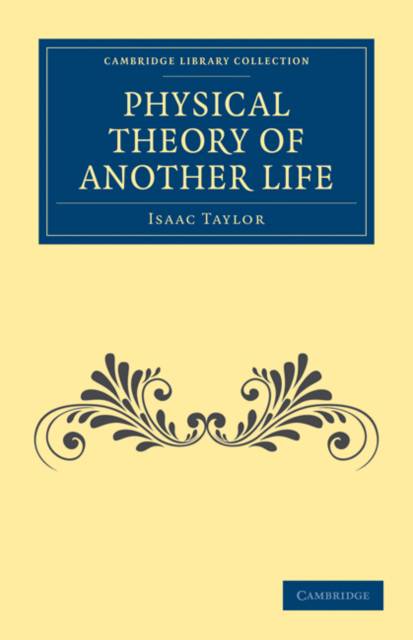
Physical Theory of Another Life
Isaac Taylor
€ 78,95
+ 157 punten
Eenvoudig bestellen
Veilig betalen


Gratis thuislevering vanaf € 30 (via bpost)
Gratis levering in je Standaard Boekhandel
Omschrijving
The philosopher and literary author Isaac Taylor (1787-1865) published this book anonymously in 1836. The work is a development of two earlier works: Saturday Evening (1832) and Natural History of Enthusiasm (1829), all three attempts to provide a philosophy to deal with the major problems and spiritual questions of the day. The popularity of Physical Theory led to Taylor relinquishing his previous anonymity. The work is a religious and philosophically speculative exploration of the possible paths of knowledge to information regarding the future existence of human beings. Taylor believed that knowledge of the human physical constitution could be used to conjecture information about the modes of human eternal life and eternity's scheme of moral duties. The work was very popular among contemporaries and offers today an important insight into Victorian intellectual life. It is a rich source for historians of nineteenth-century religious philosophy.
Specificaties
Betrokkenen
- Auteur(s):
- Uitgeverij:
Inhoud
- Aantal bladzijden:
- 336
- Taal:
- Engels
- Reeks:
Eigenschappen
- Productcode (EAN):
- 9781108073097
- Verschijningsdatum:
- 19/05/2011
- Uitvoering:
- Paperback
- Formaat:
- Trade paperback (VS)
- Afmetingen:
- 140 mm x 216 mm
- Gewicht:
- 426 g


Alleen bij Standaard Boekhandel
+ 157 punten op je klantenkaart van Standaard Boekhandel
CADEAU

AANGERADEN


Beoordelingen
We publiceren alleen reviews die voldoen aan de voorwaarden voor reviews. Bekijk onze voorwaarden voor reviews.