



Je cadeautjes zeker op tijd in huis hebben voor de feestdagen? Kom langs in onze winkels en vind het perfecte geschenk!
- Afhalen na 1 uur in een winkel met voorraad
- Gratis thuislevering in België vanaf € 30
- Ruim aanbod met 7 miljoen producten
Je cadeautjes zeker op tijd in huis hebben voor de feestdagen? Kom langs in onze winkels en vind het perfecte geschenk!
- Afhalen na 1 uur in een winkel met voorraad
- Gratis thuislevering in België vanaf € 30
- Ruim aanbod met 7 miljoen producten





€ 139,95
+ 279 punten
Uitvoering
Omschrijving
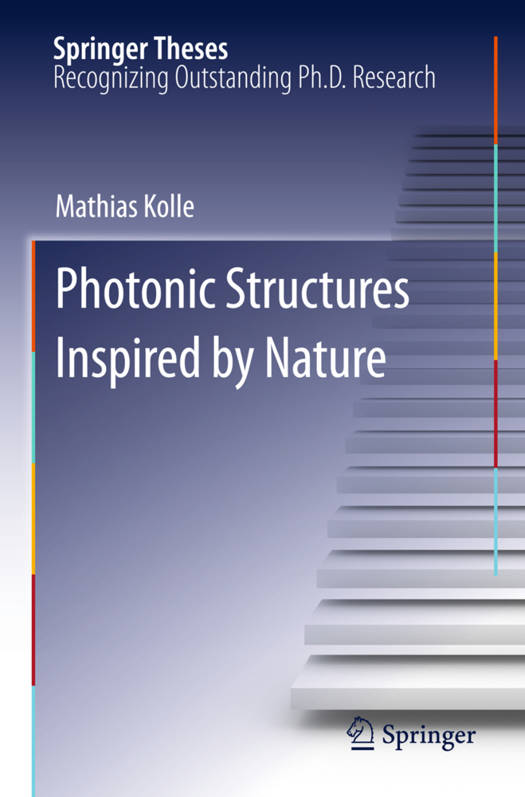
Unlike most natural colours that are based on pigment absorption, the striking iridescent and intense colouration of many butterflies, birds or beetles stems from the interaction of light with periodic sub-micrometer surface or volume patterns, so called "photonic structures". These "structural colours" are increasingly well understood, but they are difficult to create artificially and exploit technologically. In this thesis the field of natural structural colours and biomimetic photonic structures is covered in a wide scope, ranging from plant photonics to theoretical optics. It demonstrates diffractive elements on the petal surfaces of many flowering plant species; these form the basis for the study of the role of structural colours in pollinator attraction. Self-assembly techniques, combined with scale able nanofabrication methods, were used to create complex artificial photonic structures inspired by those found in nature. In particular, the colour effect of a Papilio butterfly was mimicked and, by variation of its design motive, enhanced. All photonic effects described here are underpinned by state-of-the-art model calculations.
Specificaties
Betrokkenen
- Auteur(s):
- Uitgeverij:
Inhoud
- Aantal bladzijden:
- 144
- Taal:
- Engels
- Reeks:
Eigenschappen
- Productcode (EAN):
- 9783642151682
- Verschijningsdatum:
- 7/01/2011
- Uitvoering:
- Hardcover
- Formaat:
- Ongenaaid / garenloos gebonden
- Afmetingen:
- 168 mm x 244 mm
- Gewicht:
- 362 g


Alleen bij Standaard Boekhandel
+ 279 punten op je klantenkaart van Standaard Boekhandel
CADEAU


Beoordelingen
We publiceren alleen reviews die voldoen aan de voorwaarden voor reviews. Bekijk onze voorwaarden voor reviews.