



Bedankt voor het vertrouwen het afgelopen jaar! Om jou te bedanken bieden we GRATIS verzending (in België) aan op alles gedurende de hele maand januari.
- Afhalen na 1 uur in een winkel met voorraad
- In januari gratis thuislevering in België
- Ruim aanbod met 7 miljoen producten
Bedankt voor het vertrouwen het afgelopen jaar! Om jou te bedanken bieden we GRATIS verzending (in België) aan op alles gedurende de hele maand januari.
- Afhalen na 1 uur in een winkel met voorraad
- In januari gratis thuislevering in België
- Ruim aanbod met 7 miljoen producten





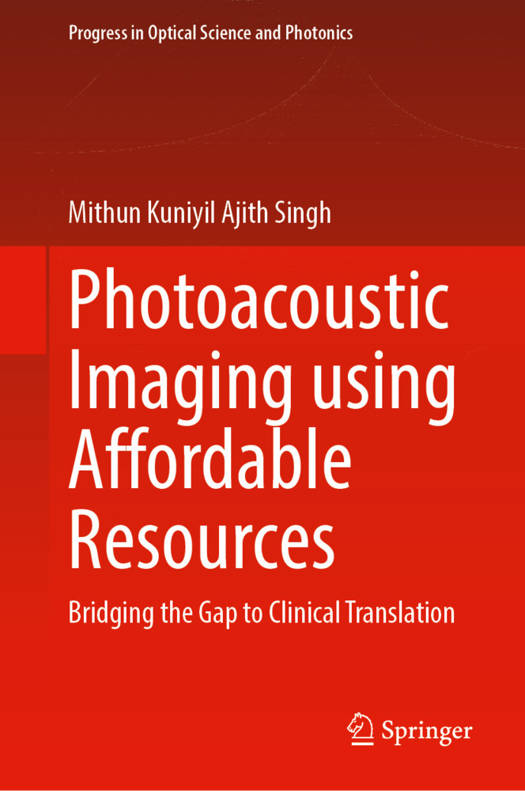
Photoacoustic Imaging using Affordable Resources
Bridging the Gap to Clinical Translation
Mithun Kuniyil Ajith Singh
€ 160,45
+ 320 punten
Omschrijving
This book serves as a comprehensive guide to the development and application of cost-effective photoacoustic imaging systems, with a particular emphasis on their potential for clinical translation. As photoacoustic imaging gains traction in both research and clinical settings, the need for affordable, scalable solutions becomes increasingly critical. This book explores the use of budget-friendly light sources, such as LEDs and laser diodes, alongside cost-effective detection schemes, to make this advanced imaging technology accessible to a broader audience. The book also uniquely consolidates practical, end-to-end resources for researchers and system developers spanning affordable hardware sourcing, open-source reconstruction software, shared datasets, and community platforms lowering the barrier for students and new laboratories entering the field. Key themes include an in-depth examination of affordable light sources and their integration into imaging systems, as well as a discussion on low-cost detection technologies that balance sensitivity and image quality. The book provides detailed case studies that showcase the successful implementation of these affordable systems in various research and clinical applications, such as cancer detection and vascular imaging. Additionally, it explores the challenges and opportunities of translating these innovations into clinical practice, addressing regulatory considerations and the potential for widespread adoption, particularly in resource-limited settings. Through practical examples, expert insights, and a focus on clinical impact, this book highlights how cost-effective innovations can drive the broader adoption of photoacoustic imaging in healthcare.
Specificaties
Betrokkenen
- Auteur(s):
- Uitgeverij:
Inhoud
- Taal:
- Engels
- Reeks:
- Reeksnummer:
- nr. 40
Eigenschappen
- Productcode (EAN):
- 9789819571741
- Verschijningsdatum:
- 14/04/2026
- Uitvoering:
- Hardcover
- Afmetingen:
- 155 mm x 235 mm


Alleen bij Standaard Boekhandel
+ 320 punten op je klantenkaart van Standaard Boekhandel
SOLDEN


Beoordelingen
We publiceren alleen reviews die voldoen aan de voorwaarden voor reviews. Bekijk onze voorwaarden voor reviews.