



Bedankt voor het vertrouwen het afgelopen jaar! Om jou te bedanken bieden we GRATIS verzending (in België) aan op alles gedurende de hele maand januari.
- Afhalen na 1 uur in een winkel met voorraad
- In januari gratis thuislevering in België
- Ruim aanbod met 7 miljoen producten
Bedankt voor het vertrouwen het afgelopen jaar! Om jou te bedanken bieden we GRATIS verzending (in België) aan op alles gedurende de hele maand januari.
- Afhalen na 1 uur in een winkel met voorraad
- In januari gratis thuislevering in België
- Ruim aanbod met 7 miljoen producten





Omschrijving
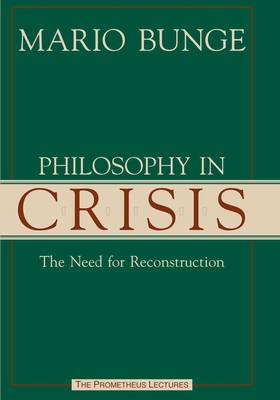
Is philosophy dead? Some philosophers have declared it to be so, and judging by some of the mental acrobatics now fashionable in postmodernist circles a reasonable person might have to agree. Though recognizing the moribund state of current academic philosophy, Mario Bunge feels that this is a crisis from which the discipline can and will recover. To overcome the impasse Bunge argues that it is necessary to reconstruct philosophy by building a philosophical system that addresses real-world problems of everyday people in a clear, comprehensible fashion. The new system must be exact and compatible with contemporary science and technology. Above all, it should shun purely academic problems.This book offers glimpses of such a system while avoiding technical jargon unfamiliar to the lay reader. It is thus accessible to the average educated reader interested in such perennial philosophical concerns as What is matter?, What is mind?, What is the nature of society?, Are there limits to our knowledge?, What are the criteria for distinguishing genuine science from pseudoscience?, and How should human rights be balanced with moral obligations? These questions will always be of interest to thinking human beings, says Bunge, and philosophy, rather than becoming a fruitless, self-referential academic game, should be the main intellectual tool for exploring and clarifying such all important issues.
Specificaties
Betrokkenen
- Auteur(s):
- Uitgeverij:
Inhoud
- Aantal bladzijden:
- 245
- Taal:
- Engels
- Reeks:
Eigenschappen
- Productcode (EAN):
- 9781573928434
- Verschijningsdatum:
- 1/01/2001
- Uitvoering:
- Hardcover
- Formaat:
- Genaaid
- Afmetingen:
- 161 mm x 237 mm
- Gewicht:
- 508 g


Alleen bij Standaard Boekhandel
+ 97 punten op je klantenkaart van Standaard Boekhandel
SOLDEN


Beoordelingen
We publiceren alleen reviews die voldoen aan de voorwaarden voor reviews. Bekijk onze voorwaarden voor reviews.