


- Afhalen na 1 uur in een winkel met voorraad
- Gratis thuislevering in België vanaf € 30
- Ruim aanbod met 7 miljoen producten
- Afhalen na 1 uur in een winkel met voorraad
- Gratis thuislevering in België vanaf € 30
- Ruim aanbod met 7 miljoen producten





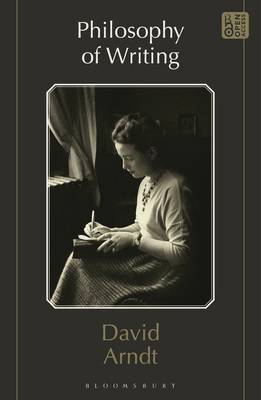
Omschrijving
Why write? Why care about writing well?
Most philosophers have seen writing as inferior to speech as a way to move toward truth. Just a few thinkers-including Epictetus, Nietzsche, Arendt, Foucault, Morrison, and Anzaldúa-have said that writing itself can be part of the search for understanding. But how can this be true? In this pathbreaking work, David Arndt argues that our views of writing have been distorted by common concepts of truth, goodness, and beauty, and that we have to critically rethink these concepts in order to better understand in what senses writing can be beautiful, good, and true. He distinguishes several kinds of thought (demonstrative, interpretive, perspectival, and narrative), and explains how they are articulated in different genres of writing (papers, essays, dialogues, and stories). He ends with fifty principles of composition that guide writing at its best. Philosophy of Writing is both a philosophical meditation on writing and a practical handbook on how to write. This luminous and illuminating book shows-in prose that is clear, graceful, and occasionally witty-how writing has been practiced as a kind of meditation conducive to the search for wisdom. But it also shows how this practice opens the deepest questions of philosophy, and calls into question the meaning of philosophy itself. The ebook editions of this book are available open access under a CC BY-NC-ND 4.0 licence on bloomsburycollections.com.Specificaties
Betrokkenen
- Auteur(s):
- Uitgeverij:
Inhoud
- Aantal bladzijden:
- 224
- Taal:
- Engels
Eigenschappen
- Productcode (EAN):
- 9781350473904
- Verschijningsdatum:
- 8/01/2026
- Uitvoering:
- Hardcover
- Formaat:
- Genaaid
- Afmetingen:
- 127 mm x 203 mm
- Gewicht:
- 349 g


Alleen bij Standaard Boekhandel
+ 230 punten op je klantenkaart van Standaard Boekhandel
Cadeau

AANGERADEN


Beoordelingen
We publiceren alleen reviews die voldoen aan de voorwaarden voor reviews. Bekijk onze voorwaarden voor reviews.