


- Afhalen na 1 uur in een winkel met voorraad
- Gratis thuislevering in België vanaf € 30
- Ruim aanbod met 7 miljoen producten
- Afhalen na 1 uur in een winkel met voorraad
- Gratis thuislevering in België vanaf € 30
- Ruim aanbod met 7 miljoen producten





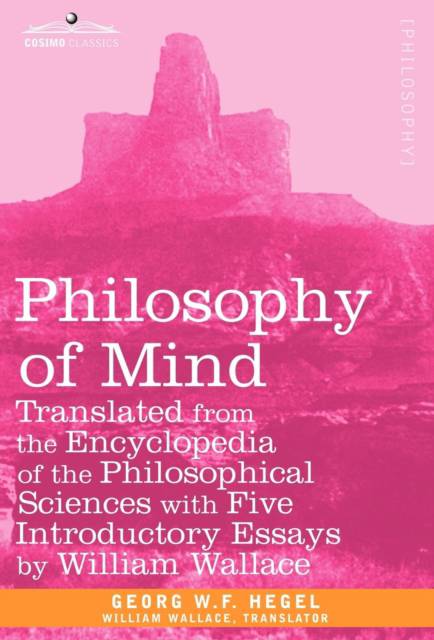
Philosophy of Mind
Translated from the Encyclopedia of the Philosophical Sciences with Five Introductory Essays by William Wallace
Georg H W Hegel
Hardcover | Engels
€ 39,45
+ 78 punten
Omschrijving
An easy-to-digest introduction the "science of the experience of consciousness" as the German Idealist philosopher GEORG WILHELM FRIEDRICH HEGEL (1770-1831) understood it, this condensed version of Hegel's The Phenomenology of Spirit--which the author created himself for his Encyclopedia of the Philosophical Sciences--explores Hegel's take on: - what mind is - the sensibility of the "physical soul" - the immediacy of the "feeling soul" - consciousness and the intellect - the theoretical mind - memory, intuition, and imagination - the morality of conscience - moral life, or social ethics - revealed religion in the "absolute mind" - and much more. This 1894 translation of the 1827-1830 German original, by Scottish philosopher and Oxford University professor WILLIAM WALLACE (1843-1897), remains a favorite of Hegel students, and is celebrated for its style and eloquence.
Specificaties
Betrokkenen
- Auteur(s):
- Vertaler(s):
- Uitgeverij:
Inhoud
- Aantal bladzijden:
- 212
- Taal:
- Engels
Eigenschappen
- Productcode (EAN):
- 9781605203874
- Verschijningsdatum:
- 1/11/2008
- Uitvoering:
- Hardcover
- Formaat:
- Genaaid
- Afmetingen:
- 140 mm x 216 mm
- Gewicht:
- 403 g


Alleen bij Standaard Boekhandel
+ 78 punten op je klantenkaart van Standaard Boekhandel
Cadeau

AANGERADEN


Beoordelingen
We publiceren alleen reviews die voldoen aan de voorwaarden voor reviews. Bekijk onze voorwaarden voor reviews.