


- Afhalen na 1 uur in een winkel met voorraad
- Gratis thuislevering in België vanaf € 30
- Ruim aanbod met 7 miljoen producten
- Afhalen na 1 uur in een winkel met voorraad
- Gratis thuislevering in België vanaf € 30
- Ruim aanbod met 7 miljoen producten





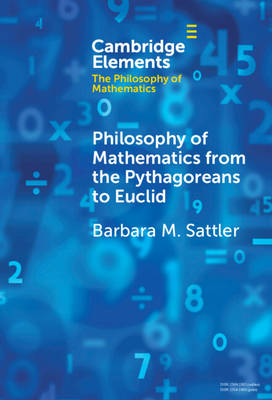
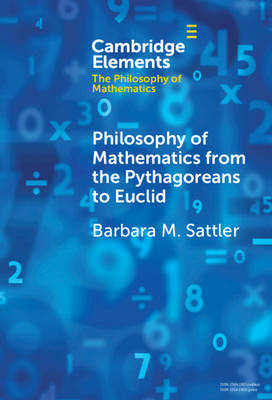
Philosophy of Mathematics from the Pythagoreans to Euclid
Barbara M Sattler
€ 124,45
+ 248 punten
Uitvoering
Omschrijving
This Element looks at the very beginning of the philosophy of mathematics in Western thought. It covers the first reflections on attempts to untie mathematics from its practical usage in administration, commerce, and land-surveying and discusses the first ideas to see mathematical structures as constituents underlying the physical world in the Pythagoreans. The first two sections focus on the epistemic status of mathematical knowledge in relation to philosophical knowledge and on the various ontological positions ancient Greek philosophers in early and classical times ascribe to mathematical objects - from independent and separate entities to mere abstractions and idealisations. Section 3 discusses the paradigmatic role mathematical deductions have played for philosophy, the role of mathematical diagrams, and mathematical methods of interest for philosophers. Section 4, finally, investigates a couple of individual concepts that are fundamental for both philosophy and mathematics, such as infinity.
Specificaties
Betrokkenen
- Auteur(s):
- Uitgeverij:
Inhoud
- Aantal bladzijden:
- 80
- Taal:
- Engels
- Reeks:
Eigenschappen
- Productcode (EAN):
- 9781009578905
- Verschijningsdatum:
- 22/05/2025
- Uitvoering:
- Hardcover
- Formaat:
- Genaaid
- Afmetingen:
- 152 mm x 229 mm
- Gewicht:
- 281 g


Alleen bij Standaard Boekhandel
+ 248 punten op je klantenkaart van Standaard Boekhandel
Cadeau

AANGERADEN


Beoordelingen
We publiceren alleen reviews die voldoen aan de voorwaarden voor reviews. Bekijk onze voorwaarden voor reviews.