


- Afhalen na 1 uur in een winkel met voorraad
- Gratis thuislevering in België vanaf € 30
- Ruim aanbod met 7 miljoen producten
- Afhalen na 1 uur in een winkel met voorraad
- Gratis thuislevering in België vanaf € 30
- Ruim aanbod met 7 miljoen producten





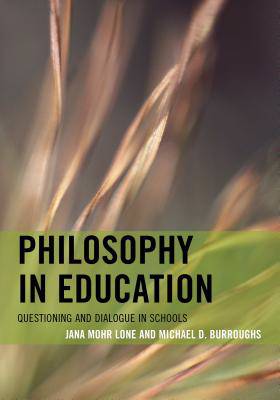
Philosophy in Education
Questioning and Dialogue in Schools
Jana Mohr Lone, Michael D Burroughs
Paperback | Engels
€ 88,45
+ 176 punten
Uitvoering
Omschrijving
Philosophy in Education: Questioning and Dialog in K-12 Classrooms is a textbook in the fields of pre-college philosophy and philosophy of education, intended for philosophers and philosophy students, K-12 classroom teachers, administrators and educators, policymakers, and pre-college practitioners of all kinds. The book offers a wealth of practical resources for use in elementary, middle school, and high school classrooms, as well as consideration of many of the broader educational, social, and political topics in the field, including the educational value of pre-college philosophy, the philosophies of education that inform this philosophical practice, and the relevance of pre-college philosophy for pressing issues in contemporary education (such as education reform, child development, and prejudice and privilege in classrooms). The book includes sections on: the expansion of philosophy beyond higher education to pre-college populations; the importance of wondering, questioning and reflection in K-12 education; the ways that philosophy is uniquely suited to help students cultivate critical reasoning and independent thinking capacities; how to develop classroom communities of philosophical inquiry and their potentially transformative impact on students; the cultivation of philosophical sensitivity and positive identity formation in childhood; strategies for recognizing and diminishing the impact of social inequalities in classrooms; and the relationship between introducing philosophy in schools and education reform.
Specificaties
Betrokkenen
- Auteur(s):
- Uitgeverij:
Inhoud
- Aantal bladzijden:
- 254
- Taal:
- Engels
Eigenschappen
- Productcode (EAN):
- 9781442234789
- Verschijningsdatum:
- 11/02/2016
- Uitvoering:
- Paperback
- Formaat:
- Trade paperback (VS)
- Afmetingen:
- 175 mm x 251 mm
- Gewicht:
- 539 g


Alleen bij Standaard Boekhandel
+ 176 punten op je klantenkaart van Standaard Boekhandel

Beoordelingen
We publiceren alleen reviews die voldoen aan de voorwaarden voor reviews. Bekijk onze voorwaarden voor reviews.