


- Afhalen na 1 uur in een winkel met voorraad
- Gratis thuislevering in België vanaf € 30
- Ruim aanbod met 7 miljoen producten
- Afhalen na 1 uur in een winkel met voorraad
- Gratis thuislevering in België vanaf € 30
- Ruim aanbod met 7 miljoen producten




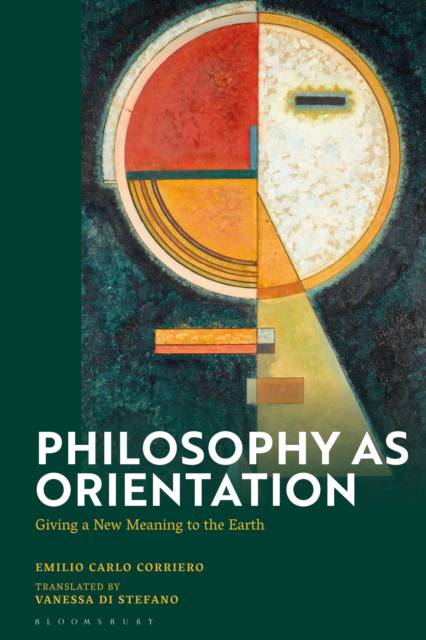
Philosophy as Orientation
Giving a New Meaning to the Earth
Emilio Carlo Corriero
Hardcover | Engels
€ 195,45
+ 390 punten
Omschrijving
Emilio Carlo Corriero makes a radical intervention on the question of the Anthropocene, proposing that to rethink our relationship with nature also requires the rediscovery of philosophy understood as orientation.
This bookcontends that the environmental issue is a philosophical problem and outlines the theoretical contradictions that must first be overcome to effectively resolve the difficulties on a practical level. At the moment in which the human being discovers himself as a natural force capable of annihilating himself and other species, it is necessary to rethink human action in terms of cooperation with other entities: a natural world to which the human being belongs with his acts and his thoughts. Unlike other human activities, philosophy is capable of taking the right distance and orienting creativity, ultimately assigning a new meaning to the earth.
Philosophy as Orientation draws on Anglophone philosophical traditions and philosophers, including Dewey, Rorty, Wittgenstein, Williams, Cavell and Putnam. It puts these traditions and thinkers into a generative dialogue with continental philosophers, in particular Schelling and Nietzsche, providing a novel framework for understanding ecological crisis. Translated by Vanessa Di Stefano, this book will be essential reading not only for philosophers but also for those in environmental humanities and science studies.
This bookcontends that the environmental issue is a philosophical problem and outlines the theoretical contradictions that must first be overcome to effectively resolve the difficulties on a practical level. At the moment in which the human being discovers himself as a natural force capable of annihilating himself and other species, it is necessary to rethink human action in terms of cooperation with other entities: a natural world to which the human being belongs with his acts and his thoughts. Unlike other human activities, philosophy is capable of taking the right distance and orienting creativity, ultimately assigning a new meaning to the earth.
Philosophy as Orientation draws on Anglophone philosophical traditions and philosophers, including Dewey, Rorty, Wittgenstein, Williams, Cavell and Putnam. It puts these traditions and thinkers into a generative dialogue with continental philosophers, in particular Schelling and Nietzsche, providing a novel framework for understanding ecological crisis. Translated by Vanessa Di Stefano, this book will be essential reading not only for philosophers but also for those in environmental humanities and science studies.
Specificaties
Betrokkenen
- Auteur(s):
- Vertaler(s):
- Uitgeverij:
Inhoud
- Aantal bladzijden:
- 216
- Taal:
- Engels
Eigenschappen
- Productcode (EAN):
- 9781350497436
- Verschijningsdatum:
- 11/12/2025
- Uitvoering:
- Hardcover
- Formaat:
- Genaaid
- Afmetingen:
- 156 mm x 234 mm
- Gewicht:
- 480 g


Alleen bij Standaard Boekhandel
+ 390 punten op je klantenkaart van Standaard Boekhandel
AANGERADEN


Beoordelingen
We publiceren alleen reviews die voldoen aan de voorwaarden voor reviews. Bekijk onze voorwaarden voor reviews.