



Je cadeautjes zeker op tijd in huis hebben voor de feestdagen? Kom langs in onze winkels en vind het perfecte geschenk!
- Afhalen na 1 uur in een winkel met voorraad
- Gratis thuislevering in België vanaf € 30
- Ruim aanbod met 7 miljoen producten
Je cadeautjes zeker op tijd in huis hebben voor de feestdagen? Kom langs in onze winkels en vind het perfecte geschenk!
- Afhalen na 1 uur in een winkel met voorraad
- Gratis thuislevering in België vanaf € 30
- Ruim aanbod met 7 miljoen producten





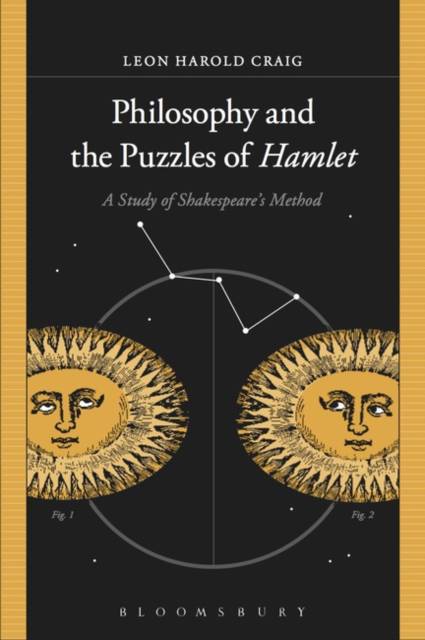
Philosophy and the Puzzles of Hamlet
A Study of Shakespeare's Method
Leon Harold Craig
Hardcover | Engels
€ 296,95
+ 593 punten
Uitvoering
Omschrijving
Shakespeare's famous play, Hamlet, has been the subject of more scholarly analysis and criticism than any other work of literature in human history. For all of its generally acknowledged virtues, however, it has also been treated as problematic in a raft of ways.
In Philosophy and the Puzzles of Hamlet, Leon Craig explains that the most oft-cited problems and criticisms are actually solvable puzzles. Through a close reading of the philosophical problems presented in Hamlet, Craig attempts to provide solutions to these puzzles.
The posing of puzzles, some more conspicuous, others less so, is fundamental to Shakespeare's philosophical method and purpose. That is, he has crafted his plays, and Hamlet in particular, so as to stimulate philosophical activity in the "judicious" (as distinct from the "unskillful") readers. By virtue of showing what so many critics treat as faults or flaws are actually intended to be interpretive challenges, Craig aims to raise appreciation for the overall coherence of Hamlet: that there is more logical rigor to its plot and psychological plausibility to its characterizations than is generally granted, even by its professed admirers.
Philosophy and the Puzzles of Hamlet endeavors to make clear why Hamlet, as a work of reason, is far better than is generally recognized, and proves its author to be, not simply the premier poet and playwright he is already universally acknowledged to be, but a philosopher in his own right.
In Philosophy and the Puzzles of Hamlet, Leon Craig explains that the most oft-cited problems and criticisms are actually solvable puzzles. Through a close reading of the philosophical problems presented in Hamlet, Craig attempts to provide solutions to these puzzles.
The posing of puzzles, some more conspicuous, others less so, is fundamental to Shakespeare's philosophical method and purpose. That is, he has crafted his plays, and Hamlet in particular, so as to stimulate philosophical activity in the "judicious" (as distinct from the "unskillful") readers. By virtue of showing what so many critics treat as faults or flaws are actually intended to be interpretive challenges, Craig aims to raise appreciation for the overall coherence of Hamlet: that there is more logical rigor to its plot and psychological plausibility to its characterizations than is generally granted, even by its professed admirers.
Philosophy and the Puzzles of Hamlet endeavors to make clear why Hamlet, as a work of reason, is far better than is generally recognized, and proves its author to be, not simply the premier poet and playwright he is already universally acknowledged to be, but a philosopher in his own right.
Specificaties
Betrokkenen
- Auteur(s):
- Uitgeverij:
Inhoud
- Aantal bladzijden:
- 296
- Taal:
- Engels
Eigenschappen
- Productcode (EAN):
- 9781628920475
- Verschijningsdatum:
- 1/07/2014
- Uitvoering:
- Hardcover
- Formaat:
- Genaaid
- Afmetingen:
- 150 mm x 236 mm
- Gewicht:
- 589 g


Alleen bij Standaard Boekhandel
+ 593 punten op je klantenkaart van Standaard Boekhandel
CADEAU


Beoordelingen
We publiceren alleen reviews die voldoen aan de voorwaarden voor reviews. Bekijk onze voorwaarden voor reviews.