


- Afhalen na 1 uur in een winkel met voorraad
- Gratis thuislevering in België vanaf € 30
- Ruim aanbod met 7 miljoen producten
- Afhalen na 1 uur in een winkel met voorraad
- Gratis thuislevering in België vanaf € 30
- Ruim aanbod met 7 miljoen producten





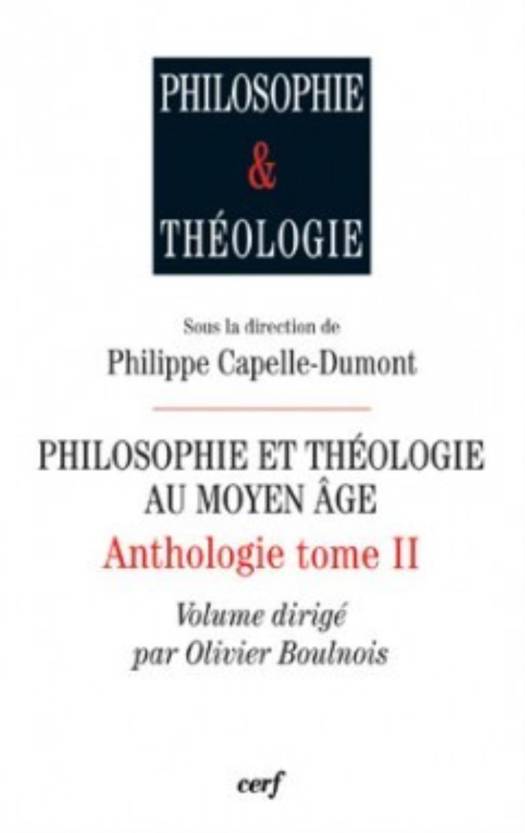
PHILOSOPHIE ET THÉOLOGIE AU MOYEN AGE
Capelle-Dumont Philippe
€ 52,00
+ 104 punten
Omschrijving
Nous présentons la première « Anthologie des relations entre la philosophie et la théologie ». Réalisée selon l'intention de la collection qui la recueille, elle s'est donnée pour objet de rassembler la mémoire ample et riche mais oubliée, parfois dissimulée, d'une détermination plurielle et fondatrice de l'histoire des idées et des pratiques occidentales. Réunissant de façon quasi exhaustive et critique les grands textes témoins, de la naissance de la philosophie à nos jours, d'une corrélation ainsi diversifiée mais continuée, elle voudrait contribuer à la tâche de clarification des thèmes et des concepts qui structurent notre « épistèm?, inspirent notre travail de connaissance et informent nos logiques d'action. Les quatre tomes qui la constituent ont été élaborés selon les quatre grandes périodes historiques dont nous avons voulu assumer précisément les limites et les seuils. Ce deuxième tome, consacré à la période médiévale, débute avec la réception byzantine au IXe siècle, l'appropriation musulmane d'Aristote au Xe siècle (Fârâbî) et se clôt sur les théologiens philosophes de la fin du XVe siècle. Formé de vingt-quatre notices nominatives et thématiques (Scot Érigène, Anselme, Abélard, les Victorins, Pierre Lombard, Bonaventure, Thomas d'Aquin, Duns Scot, Ockham, Dante, Pétrarque, Gerson, d'Ailly, Nicolas de Cues..., le « kâlam » musulman, la théologie-science, le rapport exégèse-théologie, la philosophie politique, la tension humanisme-théologie...), et suivant un ordonnancement chronologique rigoureux, il restitue les corpus fondamentaux, témoins des théorisations mais aussi des pratiques institutionnelles d'une relation qui, dans sa complexité même, a ouvert les espaces moderne et contemporain de la pensée.
--
We present the first ‘Anthologie des relations entre la philosophie et la théologie'. Constructed in the same way as other books in the collection, its aim is to assemble the testimonies - ample and rich, yet forgotten or occasionally concealed - of a pluralistic founding vision of the history of Western ideas and practices. By including a critical and almost exhaustive selection of great texts from the birth of philosophy to our times, testimonies to a diversified but continuous correlation, it aims to clarify those themes and concepts which structure our ‘episteme', inspire our acquisition of knowledge and shape our actions. The four tomes which make up this work represent four great historical periods whose limitations and thresholds we have presumed to define with precision. This second tome, devoted to the Middle Ages, begins with the Byzantine reception in the 14th century, the Muslim appropriation of Aristotle in the 5th century (Fârâbî) and closes with the philosophical theologians at the end of the 15th century. Consisting of twenty-four nominative and thematic notices (Johannes Scotus Eriugena, Anselme, Abelard, the Victorins, Pierre Lombard, Bonaventure, Thomas Aquinas, Duns Scot, Ockham, Dante, Petrarch, Gerson, d'Ailly, Nicolas de Cues... the Muslim ‘kalam', theology/science, the exegesis/theology relation, political philosophy, the humanism/theology opposition...), arranged in strict chronological order, it restores the fundamental corpus, a testimony of the theorisations but also the institutional practices within a relation which, through its very complexity, opened modern and contemporary avenues of thought.
--
We present the first ‘Anthologie des relations entre la philosophie et la théologie'. Constructed in the same way as other books in the collection, its aim is to assemble the testimonies - ample and rich, yet forgotten or occasionally concealed - of a pluralistic founding vision of the history of Western ideas and practices. By including a critical and almost exhaustive selection of great texts from the birth of philosophy to our times, testimonies to a diversified but continuous correlation, it aims to clarify those themes and concepts which structure our ‘episteme', inspire our acquisition of knowledge and shape our actions. The four tomes which make up this work represent four great historical periods whose limitations and thresholds we have presumed to define with precision. This second tome, devoted to the Middle Ages, begins with the Byzantine reception in the 14th century, the Muslim appropriation of Aristotle in the 5th century (Fârâbî) and closes with the philosophical theologians at the end of the 15th century. Consisting of twenty-four nominative and thematic notices (Johannes Scotus Eriugena, Anselme, Abelard, the Victorins, Pierre Lombard, Bonaventure, Thomas Aquinas, Duns Scot, Ockham, Dante, Petrarch, Gerson, d'Ailly, Nicolas de Cues... the Muslim ‘kalam', theology/science, the exegesis/theology relation, political philosophy, the humanism/theology opposition...), arranged in strict chronological order, it restores the fundamental corpus, a testimony of the theorisations but also the institutional practices within a relation which, through its very complexity, opened modern and contemporary avenues of thought.
Specificaties
Betrokkenen
- Auteur(s):
- Uitgeverij:
Inhoud
- Taal:
- Frans
- Reeks:
- Reeksnummer:
- nr. 2
Eigenschappen
- Productcode (EAN):
- 9782204088619
- Verschijningsdatum:
- 20/08/2009
- Uitvoering:
- Paperback
- Afmetingen:
- 138 mm x 215 mm
- Gewicht:
- 592 g


Alleen bij Standaard Boekhandel
+ 104 punten op je klantenkaart van Standaard Boekhandel
Cadeau

AANGERADEN


Beoordelingen
We publiceren alleen reviews die voldoen aan de voorwaarden voor reviews. Bekijk onze voorwaarden voor reviews.