


- Afhalen na 1 uur in een winkel met voorraad
- Gratis thuislevering in België vanaf € 30
- Ruim aanbod met 7 miljoen producten
- Afhalen na 1 uur in een winkel met voorraad
- Gratis thuislevering in België vanaf € 30
- Ruim aanbod met 7 miljoen producten





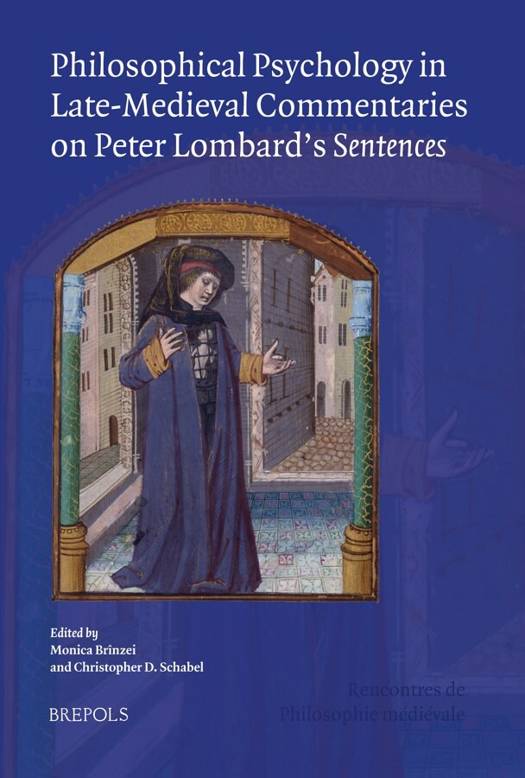
Philosophical Psychology in Late-Medieval Commentaries on Peter Lombard's Sentences
Acts of the Xivth Annual Colloquium of the Societe Internationale Pour l'Etude de la Philosophie Medievale, Radboud Universiteit, 28-30 October 2009
Monica Brinzei
€ 74,20
+ 148 punten
Omschrijving
The proceedings of the SIEPM Colloquium at Nijmegen published in this volume bring together new evidence for how the corpus of late-medieval commentaries on the Sentences, especially from the second half of the fourteenth century, contributed to the development of philosophical psychology within the discipline of theology. The relation among the faculties of the soul, the limits of knowledge, hylomorphism and the union of soul and body, intuitive and abstractive cognition, the immortality of the soul, the experience of the beatific vision, divine foreknowledge and the knowability of species are some of the topics involving psychological issues that are examined in this volume. The wealth of new information presented in this volume results from the interpretation of previously unexplored sources. The essays in this volume demonstrate that the various parts and Books of Peter Lombard's Sentences, the standard textbook of theology in the Middle Ages, provided lecturers and commentators with a variety of loci for the discussion of philosophical topics, from the principia (Denys of Montina), the Prologue (Alfonsus Vargas of Toledo, Hugolino of Orvieto, John Regis, Francis Toti of Perugia), Book I (Gregory of Rimini, John of Mirecourt, Pierre Ceffons, Hugolino of Orvieto, Pierre d'Ailly, Peter of Candia, the Vienna Group, John Capreolus, Henry of Gorkum, Denys the Carthusian), Book II (Pierre Ceffons, Peter of Candia, Guillaume de Vaurouillon, Gabriel Biel, Denys the Carthusian), and Book III (Heymericus de Campo). This diversity, within large works on theology conceived broadly, constitutes a tradition parallel to that found in commentaries on Aristotle's De anima in the late Middle Ages.
Specificaties
Betrokkenen
- Auteur(s):
- Uitgeverij:
Inhoud
- Aantal bladzijden:
- 445
- Taal:
- Engels
- Reeks:
- Reeksnummer:
- nr. 21
Eigenschappen
- Productcode (EAN):
- 9782503589091
- Verschijningsdatum:
- 4/06/2020
- Uitvoering:
- Hardcover
- Formaat:
- Genaaid
- Afmetingen:
- 163 mm x 239 mm
- Gewicht:
- 938 g


Alleen bij Standaard Boekhandel
+ 148 punten op je klantenkaart van Standaard Boekhandel
Cadeau

AANGERADEN


Beoordelingen
We publiceren alleen reviews die voldoen aan de voorwaarden voor reviews. Bekijk onze voorwaarden voor reviews.