


- Afhalen na 1 uur in een winkel met voorraad
- Gratis thuislevering in België vanaf € 30
- Ruim aanbod met 7 miljoen producten
- Afhalen na 1 uur in een winkel met voorraad
- Gratis thuislevering in België vanaf € 30
- Ruim aanbod met 7 miljoen producten





Omschrijving
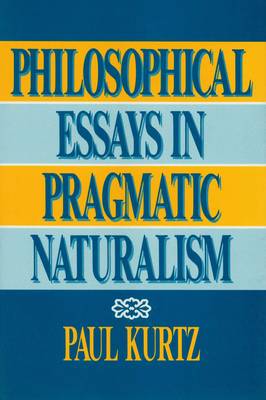
Two dominant schools have emerged in twentieth-century American philosophy: scientific naturalism and pragmatism. In this vibrant collection of hard-to-find essays, articles and contributions to books, internationally-known philosopher, author and lecturer Paul Kurtz offers his own special blend of these influential theories. With skill and clarity, "Philosophical Essays in Pragmatic Naturalism "captures naturalism's dedication to scientific method and critical intelligence (which are so much a part of ordinary life), and pragmatism's application of rational inquiry to the problems each of us face as individuals and as social beings.
Part One focuses on "empirical metaphysics," a theory of nature grounded in the natural sciences and a theory of human nature drawn from behavioral science.
Part Two defends a modified naturalistic ethic: ethical problems can be resolved by the thoughtful employment of empirical methods and value judgments that have been tested in the trenches of human conduct and proven themselves to have beneficial consequences. Rejecting subjectivitism and absolutism, Kurtz argues for a form of objective relativism in which values are shaped and winnowed in the context of everyday experiences.
Part Three contrasts pragmatic naturalism with two of its keenest critics, phenomenology and existentialistm, both of which enjoyed considerable popularity in mid-century.
"Philosophical Essays in Pragmatic Naturalism" demonstrates Kurtz's unwaivering commitment to free inquiry, his appreciation of pluralism and diversity, and his fervent belief that the scientific method and critical intelligence that gave birth to pragmatic naturalism provide the foundations for a cosmic outlook and an authentic ethical humanism.
Part One focuses on "empirical metaphysics," a theory of nature grounded in the natural sciences and a theory of human nature drawn from behavioral science.
Part Two defends a modified naturalistic ethic: ethical problems can be resolved by the thoughtful employment of empirical methods and value judgments that have been tested in the trenches of human conduct and proven themselves to have beneficial consequences. Rejecting subjectivitism and absolutism, Kurtz argues for a form of objective relativism in which values are shaped and winnowed in the context of everyday experiences.
Part Three contrasts pragmatic naturalism with two of its keenest critics, phenomenology and existentialistm, both of which enjoyed considerable popularity in mid-century.
"Philosophical Essays in Pragmatic Naturalism" demonstrates Kurtz's unwaivering commitment to free inquiry, his appreciation of pluralism and diversity, and his fervent belief that the scientific method and critical intelligence that gave birth to pragmatic naturalism provide the foundations for a cosmic outlook and an authentic ethical humanism.
Specificaties
Betrokkenen
- Auteur(s):
- Uitgeverij:
Inhoud
- Aantal bladzijden:
- 265
- Taal:
- Engels
Eigenschappen
- Productcode (EAN):
- 9780879755928
- Verschijningsdatum:
- 1/02/1990
- Uitvoering:
- Hardcover
- Formaat:
- Genaaid
- Afmetingen:
- 160 mm x 236 mm
- Gewicht:
- 566 g


Alleen bij Standaard Boekhandel
+ 103 punten op je klantenkaart van Standaard Boekhandel
AANGERADEN


Beoordelingen
We publiceren alleen reviews die voldoen aan de voorwaarden voor reviews. Bekijk onze voorwaarden voor reviews.