



- Afhalen na 1 uur in een winkel met voorraad
- In januari gratis thuislevering in België
- Ruim aanbod met 7 miljoen producten
- Afhalen na 1 uur in een winkel met voorraad
- In januari gratis thuislevering in België
- Ruim aanbod met 7 miljoen producten





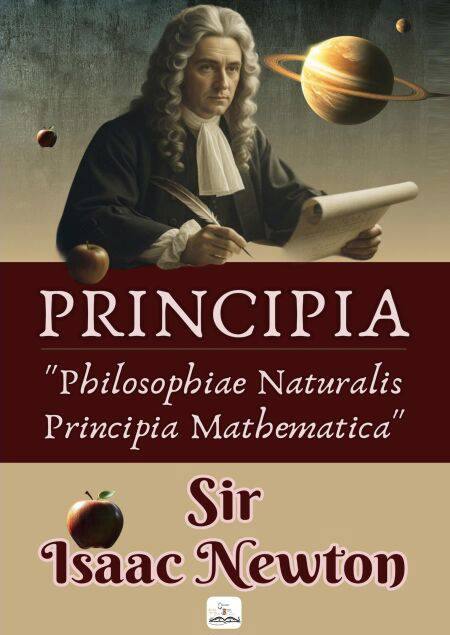
Philosophiae Naturalis Principia Mathematica E-BOOK
[Full and Annotated]
Isaac Newton
E-book | Engels
€ 10,00
+ 10 punten
Uitvoering
Omschrijving
Philosophiæ Naturalis Principia Mathematica (Latin for Mathematical Principles of Natural Philosophy), often referred to as simply the Principia, is a work in three books by Isaac Newton, in Latin, first published 5 July 1687. After annotating and correcting his personal copy of the first edition, Newton published two further editions, in 1713 and 1726. The Principia states Newton's laws of motion, forming the foundation of classical mechanics; Newton's law of universal gravitation; and a derivation of Kepler's laws of planetary motion (which Kepler first obtained empirically).
The Principia is considered one of the most important works in the history of science. The French mathematical physicist Alexis Clairaut assessed it in 1747: "The famous book of Mathematical Principles of Natural Philosophy marked the epoch of a great revolution in physics. The method followed by its illustrious author Sir Newton … spread the light of mathematics on a science which up to then had remained in the darkness of conjectures and hypotheses."
A more recent assessment has been that while acceptance of Newton's theories was not immediate, by the end of the century after publication in 1687.
The Principia is considered one of the most important works in the history of science. The French mathematical physicist Alexis Clairaut assessed it in 1747: "The famous book of Mathematical Principles of Natural Philosophy marked the epoch of a great revolution in physics. The method followed by its illustrious author Sir Newton … spread the light of mathematics on a science which up to then had remained in the darkness of conjectures and hypotheses."
A more recent assessment has been that while acceptance of Newton's theories was not immediate, by the end of the century after publication in 1687.
Specificaties
Betrokkenen
- Auteur(s):
- Uitgeverij:
Inhoud
- Aantal bladzijden:
- 638
- Taal:
- Engels
Eigenschappen
- Productcode (EAN):
- 9786253873394
- Verschijningsdatum:
- 9/02/2026
- Uitvoering:
- E-book
- Beveiligd met:
- Digital watermarking
- Formaat:
- ePub


Alleen bij Standaard Boekhandel
+ 10 punten op je klantenkaart van Standaard Boekhandel
Cadeau

AANGERADEN


Beoordelingen
We publiceren alleen reviews die voldoen aan de voorwaarden voor reviews. Bekijk onze voorwaarden voor reviews.