


- Afhalen na 1 uur in een winkel met voorraad
- Gratis thuislevering in België vanaf € 30
- Ruim aanbod met 7 miljoen producten
- Afhalen na 1 uur in een winkel met voorraad
- Gratis thuislevering in België vanaf € 30
- Ruim aanbod met 7 miljoen producten





Omschrijving
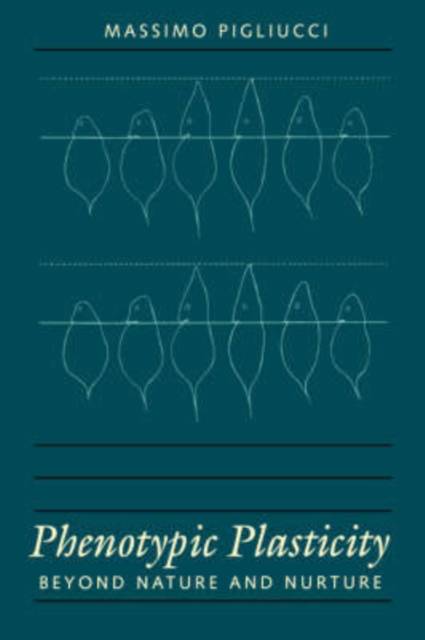
Phenotypic plasticity is the property of a given genotype to produce different phenotypes (morphologies or behaviors) in respone to distinct environmental conditions. The fundamental goal of plasticity studies is to go beyond the old nature-nurture (i.e., genes-environment) dichotomy to gain a deeper insight into how organisms are shaped by the interqaction of their genetics and ecology. Typical questions in plasticity studies include: how do novel adaptive phenotypes originate? How do organisms detect and respond to stressful environments? What is the balance between costs or constraints and natural selection? As a field of research, phenotypic plasticity has gained momentum during the past two decades, taking center stage at the interface of ecological genetics, developmental biology, and evolutionary theory. This work is the first to synthesize this burgeoning area of research, providing a conceptual overview as well as a technical treatment of its major componenets. Pigliucci describes what phenotpyic plasticity is and how it is studied, discusses types of experiments with their statistical and graphical analaysis, and provides extended examples of the molecular basis of plasticity, the plasticity of development, the ecology of plastic responses, and the role of costs and constraints in the evolution of plasticity. A brief epilogue looks at how plasticity studies shed light on the nature/nurture debate in the popular media.
Specificaties
Betrokkenen
- Auteur(s):
- Uitgeverij:
Inhoud
- Aantal bladzijden:
- 344
- Taal:
- Engels
- Reeks:
Eigenschappen
- Productcode (EAN):
- 9780801867880
- Verschijningsdatum:
- 17/07/2001
- Uitvoering:
- Hardcover
- Formaat:
- Genaaid
- Afmetingen:
- 161 mm x 236 mm
- Gewicht:
- 616 g


Alleen bij Standaard Boekhandel
+ 175 punten op je klantenkaart van Standaard Boekhandel
Wedstrijd


Beoordelingen
We publiceren alleen reviews die voldoen aan de voorwaarden voor reviews. Bekijk onze voorwaarden voor reviews.