



Je cadeautjes zeker op tijd in huis hebben voor de feestdagen? Kom langs in onze winkels en vind het perfecte geschenk!
- Afhalen na 1 uur in een winkel met voorraad
- Gratis thuislevering in België vanaf € 30
- Ruim aanbod met 7 miljoen producten
Je cadeautjes zeker op tijd in huis hebben voor de feestdagen? Kom langs in onze winkels en vind het perfecte geschenk!
- Afhalen na 1 uur in een winkel met voorraad
- Gratis thuislevering in België vanaf € 30
- Ruim aanbod met 7 miljoen producten





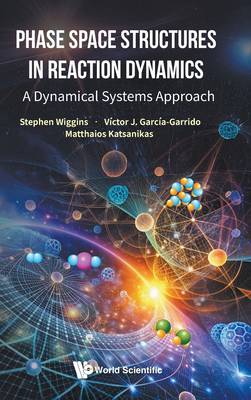
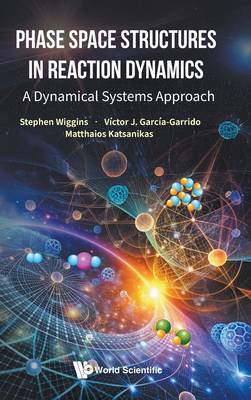
Phase Space Structures in Reaction Dynamics: A Dynamical Systems Approach
Stephen Wiggins, Victor Jose Garcia Garrido, Matthaios Katsanikas
Hardcover | Engels
€ 225,95
+ 451 punten
Omschrijving
Chemical reaction dynamics is crucial for the study of chemical processes and the mechanisms which govern them. Most frameworks, however, remain static when representing the landscape of chemical reactions, falling short of capturing fully the evolution over time of the reaction profile.This book presents an application of fundamental mathematical theories -- dynamical systems theory and phase space -- to chemical reaction dynamics. These concepts are relevant to the analysis of chemical transformations which always involve change over time. Exploiting the real-time evolution of molecular systems will enable better understanding and prediction of reaction characteristics, including reaction rates and product distributions. Traditional methods to quantify reactions rates do not always capture this complex snapshot from reactants to products.In this book, the study of potential energy surfaces (PES) and other configurational landscapes is combined with phase space and dynamical systems theory, especially using the predictive value of the Hamiltonian. Introductory chapters focus on Hamiltonian dynamical systems and the crucial concepts in phase space and reaction dynamics, such as invariant manifolds, reactive islands and transition state theory. They are followed by examples with various degrees of freedom in numerous models, such as the Morse oscillator, the De Leon-Berne Isomerization Model, and the Caldera Model. Advanced examples are also included for higher-dimensional systems.With the aim of bridging the gap between traditional static models and a more comprehensive, dynamic perspective, this book introduces dynamical systems theory in a more accessible and unified language. It should be relevant for applied mathematicians as well as computational chemists interested in chemical reaction dynamics.
Specificaties
Betrokkenen
- Auteur(s):
- Uitgeverij:
Inhoud
- Aantal bladzijden:
- 416
- Taal:
- Engels
Eigenschappen
- Productcode (EAN):
- 9789819815395
- Verschijningsdatum:
- 30/11/2025
- Uitvoering:
- Hardcover
- Formaat:
- Genaaid
- Afmetingen:
- 152 mm x 229 mm
- Gewicht:
- 721 g


Alleen bij Standaard Boekhandel
+ 451 punten op je klantenkaart van Standaard Boekhandel
CADEAU


Beoordelingen
We publiceren alleen reviews die voldoen aan de voorwaarden voor reviews. Bekijk onze voorwaarden voor reviews.