



Bedankt voor het vertrouwen het afgelopen jaar! Om jou te bedanken bieden we GRATIS verzending (in België) aan op alles gedurende de hele maand januari.
- Afhalen na 1 uur in een winkel met voorraad
- In januari gratis thuislevering in België
- Ruim aanbod met 7 miljoen producten
Bedankt voor het vertrouwen het afgelopen jaar! Om jou te bedanken bieden we GRATIS verzending (in België) aan op alles gedurende de hele maand januari.
- Afhalen na 1 uur in een winkel met voorraad
- In januari gratis thuislevering in België
- Ruim aanbod met 7 miljoen producten





€ 40,45
+ 80 punten
Omschrijving
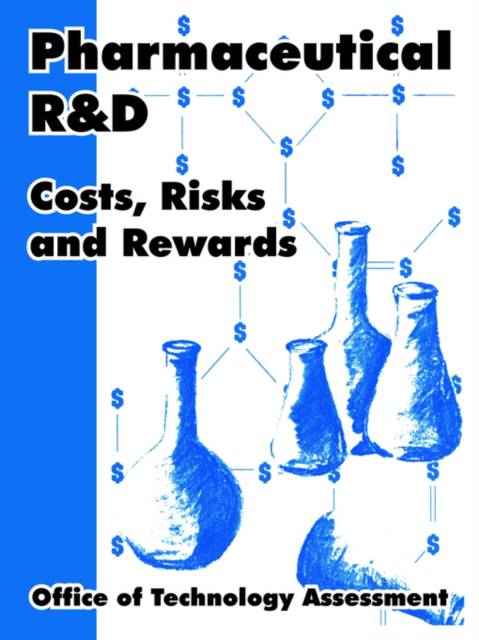
Pharmaceutical costs are among the fastest growing components of health care costs today. Although increases in the inflation-adjusted prices of ethical drugs and perceived high prices of new drugs have been a concern of congressional committees for over 30 years, the growing Federal role in paying for prescription drugs has increased the concern over the appropriateness of prices relative to the costs of bringing new drugs to market. Specific policies of U.S. and other governments can alter the delicate balance between costs and returns to pharmaceutical R&D, with ramifications for the future health of Americans, for health care costs, and for the future of the U.S. pharmaceutical industry. OTA's report focuses mainly on the economic side of the R&D process. Pharmaceutical R&D is an investment, and the principal characteristic of an investment is that money is spent today in the hopes of generating even more money in the future. Pharmaceutical R&D is a risky investment; therefore, high financial returns are necessary to induce companies to invest in researching new chemical entities. Changes in Federal policy that affect the cost, uncertainty and returns of pharmaceutical R&D may have dramatic effects on the investment patterns of the industry. Given this sensitivity to policy changes, careful consideration of the effects on R&D is needed. The specific request for this study came from the House Committee on Energy and Commerce and its Subcommittee on Health and the Environment. The Senate Committee on the Judiciary's Subcommittee on Antitrust, Monopolies, and Business Rights endorsed the study. OTA was assisted in this study by an advisory panel of business, consumer, and academic leaders chaired by Frederick M. Scherer, Ph.D., Professor of Economics, John E Kennedy School of Government at Harvard University. OTA gratefully acknowledges the contribution of each of these individuals. As with all OTA reports, the final responsibility for the content of the assessment rests with OTA.
Specificaties
Betrokkenen
- Auteur(s):
- Uitgeverij:
Inhoud
- Aantal bladzijden:
- 368
- Taal:
- Engels
Eigenschappen
- Productcode (EAN):
- 9781410220493
- Verschijningsdatum:
- 14/02/2005
- Uitvoering:
- Paperback
- Formaat:
- Trade paperback (VS)
- Afmetingen:
- 210 mm x 279 mm
- Gewicht:
- 825 g


Alleen bij Standaard Boekhandel
+ 80 punten op je klantenkaart van Standaard Boekhandel
SOLDEN


Beoordelingen
We publiceren alleen reviews die voldoen aan de voorwaarden voor reviews. Bekijk onze voorwaarden voor reviews.