


- Afhalen na 1 uur in een winkel met voorraad
- Gratis thuislevering in België vanaf € 30
- Ruim aanbod met 7 miljoen producten
- Afhalen na 1 uur in een winkel met voorraad
- Gratis thuislevering in België vanaf € 30
- Ruim aanbod met 7 miljoen producten





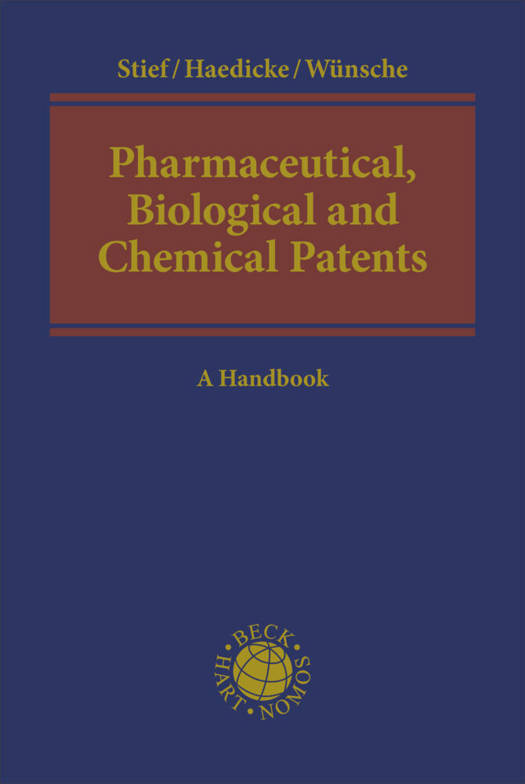
Pharmaceutical, Biological and Chemical Patents
A Handbook
Marco Stief, Maximilian Haedicke, Annelie Wünsche
€ 499,45
+ 998 punten
Uitvoering
Omschrijving
The topic of pharmaceutical, biological and chemical patents is a special matter within European and German patent law. There are several structural alterations, like polymorphism and enantiomerism, leading to a derivative of a substance that is comprised in the prior art. This gives rise to the question under what circumstances such alterations can be novel and in which cases they are included in the state of the art. But even if a substance is prior art, a new medical use of it can be patented, as such medical use patents are politically intended to promote medical research.
On the other hand, it is unclear how to deal with natural occurrences of a substance in terms of its accessibility and bioethics.
It must also be understood how different identifications of a substance and the resulting patents interrelate with each other, i.e. how their scopes of protection are defined. This is problematic especially because of the absolute substance protection, which includes all conceivable uses and methods.
The past decisions of the ECJ as regards broccoli- and to-mato-patents, as well as embryonic stem cells have highlighted the importance of this field of law.
Most of the proceedings regarding pharmaceutical, biological and chemical patents are held in German courts. The German jurisprudence is also of importance to the subject matter, as it has often been the basis for decisions of the ECJ. Thus, German case law is used to illustrate the comments.
Dr Maximilian Haedickeholds a chair in IP law at the University of Freiburg, Germany, and is judge at the Düsseldorf Regional Court of Appeal.
Dr Marco Stief, LL.M.andDr Dirk Bühler are patent attorneys and partners in Maiwald Patentanwälte in Munich, Germany.
Specificaties
Betrokkenen
- Auteur(s):
- Uitgeverij:
Inhoud
- Taal:
- Engels
- Reeks:
Eigenschappen
- Productcode (EAN):
- 9783406648557
- Verschijningsdatum:
- 10/12/2025
- Uitvoering:
- Hardcover
- Formaat:
- Linnen over kaft
- Afmetingen:
- 165 mm x 52 mm
- Gewicht:
- 1653 g


Alleen bij Standaard Boekhandel
+ 998 punten op je klantenkaart van Standaard Boekhandel
Cadeau

AANGERADEN


Beoordelingen
We publiceren alleen reviews die voldoen aan de voorwaarden voor reviews. Bekijk onze voorwaarden voor reviews.