


- Afhalen na 1 uur in een winkel met voorraad
- Gratis thuislevering in België vanaf € 30
- Ruim aanbod met 7 miljoen producten
- Afhalen na 1 uur in een winkel met voorraad
- Gratis thuislevering in België vanaf € 30
- Ruim aanbod met 7 miljoen producten





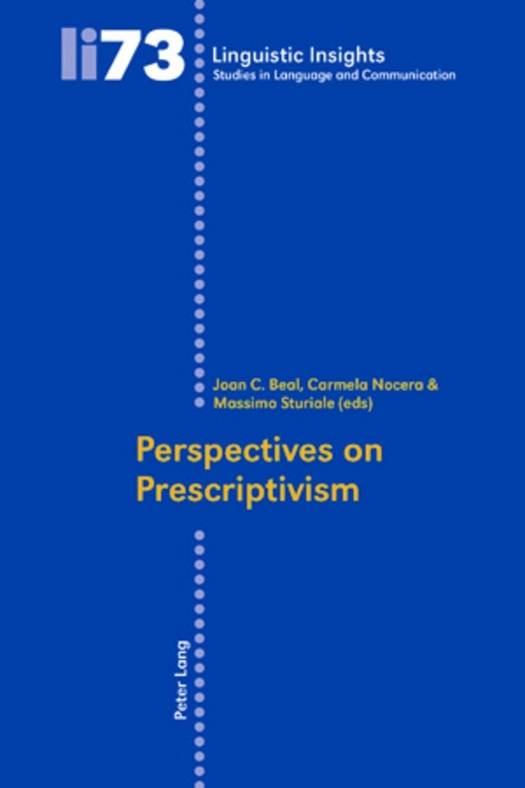
Perspectives on Prescriptivism
€ 191,45
+ 382 punten
Omschrijving
The colloquium Perspectives on Prescriptivism (20-22 April 2006) was hosted by the University of Catania - Faculty of Foreign Languages - in Ragusa. Until very recently, the received view among linguists was that prescriptivism was a 'bad thing', something only worth considering in order to condemn it as a product of unenlightened thinking. The organisers wished to encourage participants to look at linguistic prescriptivism from a wide range of perspectives. Some of the main questions asked were: To what extent is the concept of prescriptivism to be considered a typical product of the 18th century? What is the attitude of 21st-century scholars and language guardians towards linguistic 'correctness'? To what extent were books more prescriptive - rather than descriptive - in what has generally been described as 'the age of correctness'? Some of the answers are to be found in this volume.
Specificaties
Betrokkenen
- Uitgeverij:
Inhoud
- Aantal bladzijden:
- 278
- Taal:
- Engels
- Reeks:
- Reeksnummer:
- nr. 73
Eigenschappen
- Productcode (EAN):
- 9783039116324
- Verschijningsdatum:
- 30/04/2008
- Uitvoering:
- Paperback
- Formaat:
- Trade paperback (VS)
- Afmetingen:
- 150 mm x 224 mm
- Gewicht:
- 480 g

Alleen bij Standaard Boekhandel
+ 382 punten op je klantenkaart van Standaard Boekhandel
AANGERADEN


Beoordelingen
We publiceren alleen reviews die voldoen aan de voorwaarden voor reviews. Bekijk onze voorwaarden voor reviews.