


- Afhalen na 1 uur in een winkel met voorraad
- Gratis thuislevering in België vanaf € 30
- Ruim aanbod met 7 miljoen producten
- Afhalen na 1 uur in een winkel met voorraad
- Gratis thuislevering in België vanaf € 30
- Ruim aanbod met 7 miljoen producten




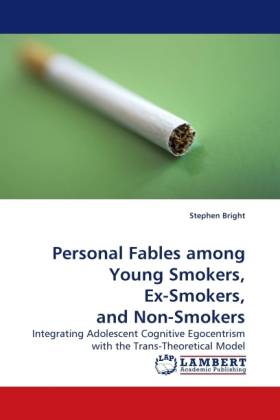
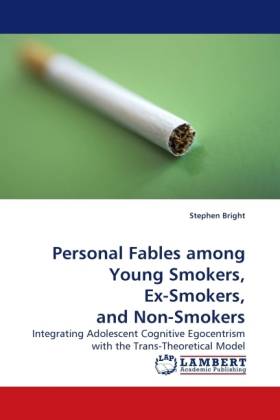
Personal Fables among Young Smokers, Ex-Smokers, and Non-Smokers
Integrating Adolescent Cognitive Egocentrism with the Trans-Theoretical Model
Stephen Bright
Paperback | Engels
€ 48,45
+ 96 punten
Omschrijving
The personal fables, a component of adolescent cognitive egocentrism that has been associated with unhealthy and high-risk behaviour participation, is examined in relation to cigarette smoking. To extend the current understanding of the Trans-Theoretical Model (TTM) of behaviour change, the study additionally examines whether the personal fables inhibit forward Stage of Change (SOC) movement. Contrary to prediction, ex-smokers had higher personal fable beliefs than individuals who have never smoked. As predicted, pre-contemplators had higher overall personal fable beliefs than contemplators suggesting that the personal fables could obstruct forward SOC movement; however, no differences in subscale scores were observed. These results suggest that personal fable ideation might both facilitate and inhibit smoking cessation. As such, current conceptualisations of this construct might need to be re-examined, and might explain the ineffectiveness of interventions targeting adolescents that are underpinned by the TTM.
Specificaties
Betrokkenen
- Auteur(s):
- Uitgeverij:
Inhoud
- Aantal bladzijden:
- 84
- Taal:
- Engels
Eigenschappen
- Productcode (EAN):
- 9783838324708
- Uitvoering:
- Paperback


Alleen bij Standaard Boekhandel
+ 96 punten op je klantenkaart van Standaard Boekhandel
AANGERADEN


Beoordelingen
We publiceren alleen reviews die voldoen aan de voorwaarden voor reviews. Bekijk onze voorwaarden voor reviews.