



Bedankt voor het vertrouwen het afgelopen jaar! Om jou te bedanken bieden we GRATIS verzending (in België) aan op alles gedurende de hele maand januari.
- Afhalen na 1 uur in een winkel met voorraad
- In januari gratis thuislevering in België
- Ruim aanbod met 7 miljoen producten
Bedankt voor het vertrouwen het afgelopen jaar! Om jou te bedanken bieden we GRATIS verzending (in België) aan op alles gedurende de hele maand januari.
- Afhalen na 1 uur in een winkel met voorraad
- In januari gratis thuislevering in België
- Ruim aanbod met 7 miljoen producten





Omschrijving
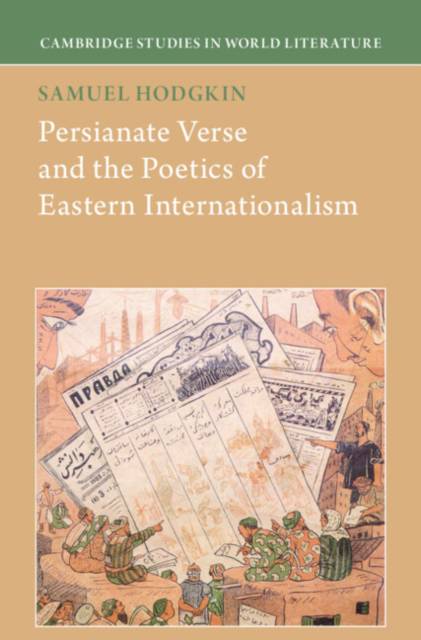
At the height of literary nationalisms in the twentieth century, leftist internationalists from Turkey, Iran, Afghanistan, India, and the Soviet East bonded over their shared love of the classical Persian verses of Hafiz and Khayyam. At writers' congresses and in communist literary journals, they affirmed their friendship and solidarity with lyric ghazals and ruba'iyat. Persianate poetry became the cultural commons for a distinctively Eastern internationalism, shaping national literatures in the Soviet Union, the Middle East, and South Asia. By the early Cold War, the literary entanglement between Persianate culture and communism had established models for cultural decolonization that would ultimately outlast the Soviet imperial project. In the archive of literature produced under communism in Persian, Tajik, Dari, Turkish, Uzbek, Azerbaijani, Armenian, and Russian, this book finds a vital alternative to Western globalized world literature.
Specificaties
Betrokkenen
- Auteur(s):
- Uitgeverij:
Inhoud
- Aantal bladzijden:
- 312
- Taal:
- Engels
- Reeks:
Eigenschappen
- Productcode (EAN):
- 9781009411639
- Verschijningsdatum:
- 21/12/2023
- Uitvoering:
- Hardcover
- Formaat:
- Genaaid
- Afmetingen:
- 152 mm x 229 mm
- Gewicht:
- 625 g


Alleen bij Standaard Boekhandel
+ 317 punten op je klantenkaart van Standaard Boekhandel
SOLDEN


Beoordelingen
We publiceren alleen reviews die voldoen aan de voorwaarden voor reviews. Bekijk onze voorwaarden voor reviews.