


- Afhalen na 1 uur in een winkel met voorraad
- Gratis thuislevering in België vanaf € 30
- Ruim aanbod met 7 miljoen producten
- Afhalen na 1 uur in een winkel met voorraad
- Gratis thuislevering in België vanaf € 30
- Ruim aanbod met 7 miljoen producten




Omschrijving
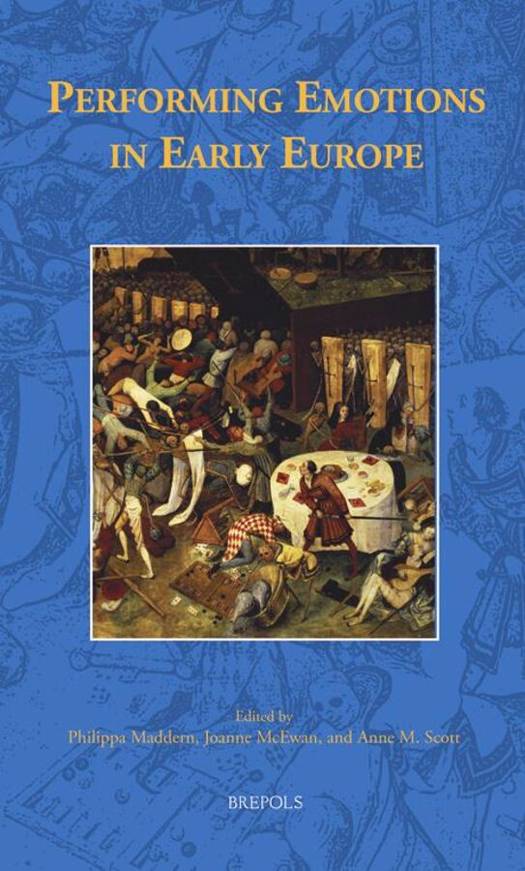
Drawing on a range of interdisciplinary approaches and innovative methodologies, this collection contributes ground-breaking new scholarship in the burgeoning field of emotions studies by examining how medieval and early modern Europeans communicated and 'performed' their emotions. Rejecting the notion that emotions are 'essential' or 'natural', this volume seeks to pay particular attention to cultural understandings of emotion by examining how they were expressed and conveyed in a wide range of historical situations. The contributors investigate the performance and reception of pre-modern emotions in a variety of contexts--in literature, art, and music, as well as through various social and religious performances--and in a variety of time periods ranging from the twelfth to the eighteenth centuries. These studies provide both case-studies of particular emotions and emotional negotiations, and examinations of how their categorisation, interpretation, and meaning has changed over time. The contributors provide new insights into the expression and performance of pre-modern emotions from a wide range of disciplinary fields, including historical studies, literature, art history, musicology, gender studies, religious studies, and philosophy. Collectively, they theorise the performativity of medieval and early modern emotions and outline a new approach that takes fuller account of the historical specificity and cultural meanings of emotions at particular points in time. This volume complements the earlier volume Understanding Emotions in Early Europe, edited by Michael Champion and Andrew Lynch (2015).
Specificaties
Betrokkenen
- Auteur(s):
- Uitgeverij:
Inhoud
- Aantal bladzijden:
- 296
- Taal:
- Engels
- Reeks:
- Reeksnummer:
- nr. 11
Eigenschappen
- Productcode (EAN):
- 9782503572376
- Verschijningsdatum:
- 21/05/2018
- Uitvoering:
- Hardcover
- Formaat:
- Genaaid
- Afmetingen:
- 165 mm x 236 mm
- Gewicht:
- 748 g


Alleen bij Standaard Boekhandel
+ 201 punten op je klantenkaart van Standaard Boekhandel
AANGERADEN


Beoordelingen
We publiceren alleen reviews die voldoen aan de voorwaarden voor reviews. Bekijk onze voorwaarden voor reviews.