



- Afhalen na 1 uur in een winkel met voorraad
- In januari gratis thuislevering in België
- Ruim aanbod met 7 miljoen producten
- Afhalen na 1 uur in een winkel met voorraad
- In januari gratis thuislevering in België
- Ruim aanbod met 7 miljoen producten





€ 28,95
+ 57 punten
Omschrijving
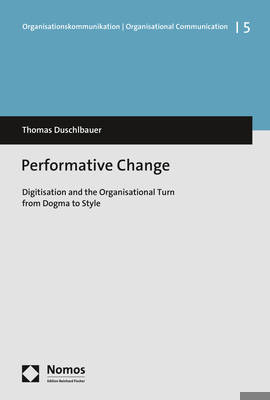
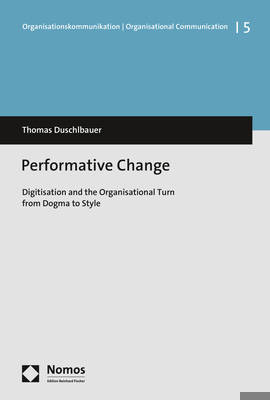
Due to the phenomena of digitalisation, a new inventory regarding fundamental questions of organisation and communication has taken place, which has ultimately led to a plea for a paradigm shift. For if one follows recent developments in organisational theory and rethinks it radically, the relationship between the means and the purpose-that is, between production and the product and between creation and the artefact-is also reversed. With that relationship seen in this manner, it is not necessarily the organisation and socialisation of human beings that enables them to create artefacts, but it is rather the artefact that may serve to bring people together, enable them to acquire new skills and knowledge, and finally bring organisation to the level that we are now familiar with. Transferred to communication, this would also call into question the ideal of a consensus and, on the other hand, give more prominence to the idea of language games-as first formulated by Ludwig Wittgenstein.
Specificaties
Betrokkenen
- Auteur(s):
- Uitgeverij:
Inhoud
- Aantal bladzijden:
- 125
- Taal:
- Engels
- Reeks:
- Reeksnummer:
- nr. 5
Eigenschappen
- Productcode (EAN):
- 9783848751280
- Uitvoering:
- Paperback
- Afmetingen:
- 155 mm x 9 mm
- Gewicht:
- 217 g


Alleen bij Standaard Boekhandel
+ 57 punten op je klantenkaart van Standaard Boekhandel
Cadeau

AANGERADEN


Beoordelingen
We publiceren alleen reviews die voldoen aan de voorwaarden voor reviews. Bekijk onze voorwaarden voor reviews.