



Je cadeautjes zeker op tijd in huis hebben voor de feestdagen? Kom langs in onze winkels en vind het perfecte geschenk!
- Afhalen na 1 uur in een winkel met voorraad
- Gratis thuislevering in België vanaf € 30
- Ruim aanbod met 7 miljoen producten
Je cadeautjes zeker op tijd in huis hebben voor de feestdagen? Kom langs in onze winkels en vind het perfecte geschenk!
- Afhalen na 1 uur in een winkel met voorraad
- Gratis thuislevering in België vanaf € 30
- Ruim aanbod met 7 miljoen producten





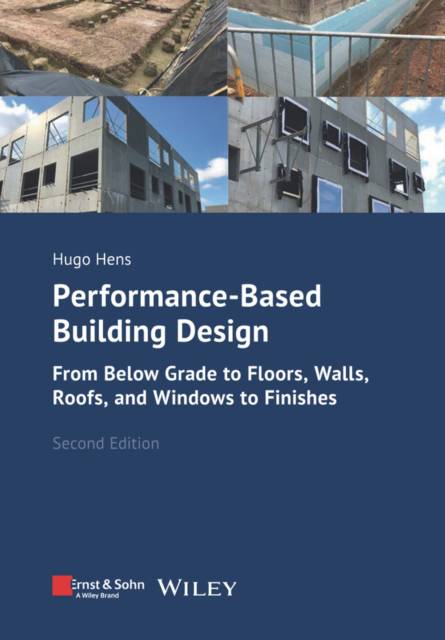
Performance-Based Building Design
From Below Grade to Floors, Walls, Roofs, Windows and Finishes
Hugo S L Hens
Paperback | Engels
€ 87,95
+ 175 punten
Omschrijving
This third book in a series of three dealing with building physics and its application, looks to the impact a performance requirements linked approach has on building design and construction. It starts with a resumption of what's expected from buildings, followed by discussing a range of materials needed to guarantee a correct heat, air, moisture response. Then, looked is to preparing the building site, the excavations needed, the foundations, the below-grade parts and spaces, the structural systems commonly used, the floors, different types of outer walls, different types of roof assemblies, inside walls, the glazing, windows, outer doors, glass façades, balconies, all kind of shafts, chimneys, stairs, timber-frame construction, wall, floor and ceiling finishes. Each time, not only the heat, air, moisture related metrics but also structural integrity, durability, fire safety, acoustics, maintenance, sustainability and buildability are discussed. The book ends with a look at the risks deficiencies may cause.
Beside years of teaching, research and curing damage cases due to failing performance, a bunch of national and international sources and literature has been consulted, which is why each chapter ends with an extended list of further reading.
Mayor changes compared to the first edition is that the two volumes form one now, whereby combining, reshuffling, extending and redrafting was done where appropriate and necessary, so reducing the number of chapters from 28 to 20. Excavations and foundations now form a joint chapter, while the requirements for outer walls and roofs are considered uniformly and are now available in eight chapters on the building envelope, five of which are on outer walls and three on roof structures. Followed by the inside walls and other specific parts, and one chapter on windows, outer doors and glass facades. The last three chapters deal with timber-frame construction, finishings, and risk assessment.
The content of all chapters has been critically reviewed, actualized and gifted with additional figures where needed, so incorporating the experiences gained during 38 years of teaching to architectural and building engineering students, 36 years of research and 53 years of consultancy.
Beside years of teaching, research and curing damage cases due to failing performance, a bunch of national and international sources and literature has been consulted, which is why each chapter ends with an extended list of further reading.
Mayor changes compared to the first edition is that the two volumes form one now, whereby combining, reshuffling, extending and redrafting was done where appropriate and necessary, so reducing the number of chapters from 28 to 20. Excavations and foundations now form a joint chapter, while the requirements for outer walls and roofs are considered uniformly and are now available in eight chapters on the building envelope, five of which are on outer walls and three on roof structures. Followed by the inside walls and other specific parts, and one chapter on windows, outer doors and glass facades. The last three chapters deal with timber-frame construction, finishings, and risk assessment.
The content of all chapters has been critically reviewed, actualized and gifted with additional figures where needed, so incorporating the experiences gained during 38 years of teaching to architectural and building engineering students, 36 years of research and 53 years of consultancy.
Specificaties
Betrokkenen
- Auteur(s):
- Uitgeverij:
Inhoud
- Aantal bladzijden:
- 592
- Taal:
- Engels
Eigenschappen
- Productcode (EAN):
- 9783433034392
- Verschijningsdatum:
- 22/04/2024
- Uitvoering:
- Paperback
- Formaat:
- Trade paperback (VS)
- Afmetingen:
- 170 mm x 244 mm
- Gewicht:
- 1077 g


Alleen bij Standaard Boekhandel
+ 175 punten op je klantenkaart van Standaard Boekhandel
CADEAU


Beoordelingen
We publiceren alleen reviews die voldoen aan de voorwaarden voor reviews. Bekijk onze voorwaarden voor reviews.