



Je cadeautjes zeker op tijd in huis hebben voor de feestdagen? Kom langs in onze winkels en vind het perfecte geschenk!
- Afhalen na 1 uur in een winkel met voorraad
- Gratis thuislevering in België vanaf € 30
- Ruim aanbod met 7 miljoen producten
Je cadeautjes zeker op tijd in huis hebben voor de feestdagen? Kom langs in onze winkels en vind het perfecte geschenk!
- Afhalen na 1 uur in een winkel met voorraad
- Gratis thuislevering in België vanaf € 30
- Ruim aanbod met 7 miljoen producten





€ 47,95
+ 95 punten
Omschrijving
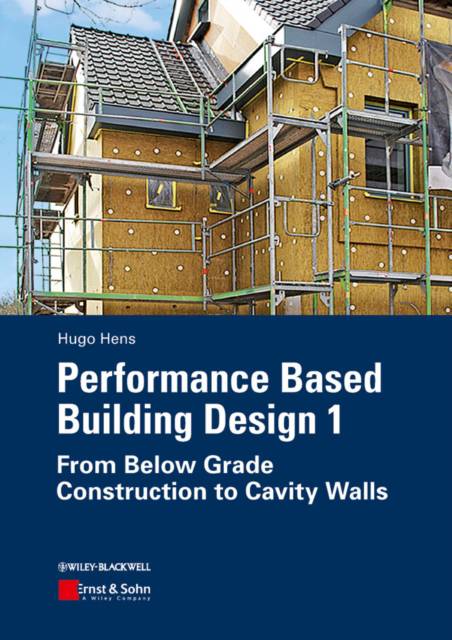
Just like building physics, performance based building design was hardly an issue before the energy crises of the 1970s. With the need to upgrade energy efficiency, the interest in overall building performance grew. The term "performance" encompasses all building-related physical properties and qualities that are predictable during the design stage and controllable during and after construction. The term "predictable" demands calculation tools and physical models that allow evaluating a design, whereas "controllable" presumes the existence of measuring methods available on site. The basis for a system of performance arrays are the functional demands, the needs for accessibility, safety, well-being, durability, energy efficiency and sustainability and the requirements imposed by the usage of a building.
As the first of two volumes, this book applies the performance rationale, advanced in applied building physics, to the design and construction of buildings. After an overview of materials for thermal insulation, water proofing, air tightening and vapour tightening and a discussion on joints, building construction is analysed, starting with the excavations. Then foundations, below and on grade constructions, typical load bearing systems and floors pass the review to end with massive outer walls insulated at the inside and the outside and cavity walls. Most chapters build on a same scheme: overview, overall performance evaluation, design and construction.
The book is absolutely recommended to undergraduates and graduates in architectural and building engineering, though also building engineers, who want to refresh their knowledge, may benefit. The level of discussion assumes the reader has a sound knowledge of building physics, along with a background in structural engineering, building materials and building construction. Where and when needed, input and literature from over the world was used, reason why each chapter ends listing references and literature.
As the first of two volumes, this book applies the performance rationale, advanced in applied building physics, to the design and construction of buildings. After an overview of materials for thermal insulation, water proofing, air tightening and vapour tightening and a discussion on joints, building construction is analysed, starting with the excavations. Then foundations, below and on grade constructions, typical load bearing systems and floors pass the review to end with massive outer walls insulated at the inside and the outside and cavity walls. Most chapters build on a same scheme: overview, overall performance evaluation, design and construction.
The book is absolutely recommended to undergraduates and graduates in architectural and building engineering, though also building engineers, who want to refresh their knowledge, may benefit. The level of discussion assumes the reader has a sound knowledge of building physics, along with a background in structural engineering, building materials and building construction. Where and when needed, input and literature from over the world was used, reason why each chapter ends listing references and literature.
Specificaties
Betrokkenen
- Auteur(s):
- Uitgeverij:
Inhoud
- Aantal bladzijden:
- 276
- Taal:
- Engels
- Reeks:
- Reeksnummer:
- nr. 1
Eigenschappen
- Productcode (EAN):
- 9783433030226
- Verschijningsdatum:
- 14/05/2012
- Uitvoering:
- Paperback
- Formaat:
- Trade paperback (VS)
- Afmetingen:
- 171 mm x 240 mm
- Gewicht:
- 557 g


Alleen bij Standaard Boekhandel
+ 95 punten op je klantenkaart van Standaard Boekhandel
CADEAU


Beoordelingen
We publiceren alleen reviews die voldoen aan de voorwaarden voor reviews. Bekijk onze voorwaarden voor reviews.