


- Afhalen na 1 uur in een winkel met voorraad
- Gratis thuislevering in België vanaf € 30
- Ruim aanbod met 7 miljoen producten
- Afhalen na 1 uur in een winkel met voorraad
- Gratis thuislevering in België vanaf € 30
- Ruim aanbod met 7 miljoen producten





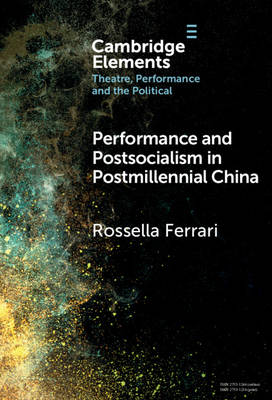
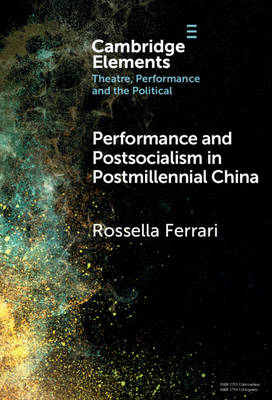
Performance and Postsocialism in Postmillennial China
Rossella Ferrari
€ 124,45
+ 248 punten
Uitvoering
Omschrijving
This Element examines performance in postmillennial China through the lens of postsocialism. The fragmented ontology of Chinese postsocialism captures the structural contradictions of a political system that supports a neoliberal economy while continuing to promote socialist values. This study explores how the ideological ambivalence and cultural paradoxes that characterise the postsocialist condition are embodied and represented in performance. Focusing on independent practitioners and postdramatic practices, it builds on theorisations of postsocialism as a state of temporal disjunction to propose a tripartite taxonomy structured around past, present, and future temporal regimes. The categories of postsocialist hauntologies, postsocialist realisms, and postsocialist futurities are introduced to investigate performance works that respectively revisit the socialist past, document present realities, and envision future imaginations. The intersection of competing temporalities and their performative manifestations reflects the disjunctive constitution of contemporary China, where past socialist legacies and futurological ambitions coexist within a fractured postsocialist present.
Specificaties
Betrokkenen
- Auteur(s):
- Uitgeverij:
Inhoud
- Aantal bladzijden:
- 84
- Taal:
- Engels
- Reeks:
Eigenschappen
- Productcode (EAN):
- 9781009515894
- Verschijningsdatum:
- 6/02/2025
- Uitvoering:
- Hardcover
- Formaat:
- Genaaid
- Afmetingen:
- 152 mm x 229 mm
- Gewicht:
- 285 g


Alleen bij Standaard Boekhandel
+ 248 punten op je klantenkaart van Standaard Boekhandel
Cadeau

AANGERADEN


Beoordelingen
We publiceren alleen reviews die voldoen aan de voorwaarden voor reviews. Bekijk onze voorwaarden voor reviews.