


- Afhalen na 1 uur in een winkel met voorraad
- Gratis thuislevering in België vanaf € 30
- Ruim aanbod met 7 miljoen producten
- Afhalen na 1 uur in een winkel met voorraad
- Gratis thuislevering in België vanaf € 30
- Ruim aanbod met 7 miljoen producten





Omschrijving
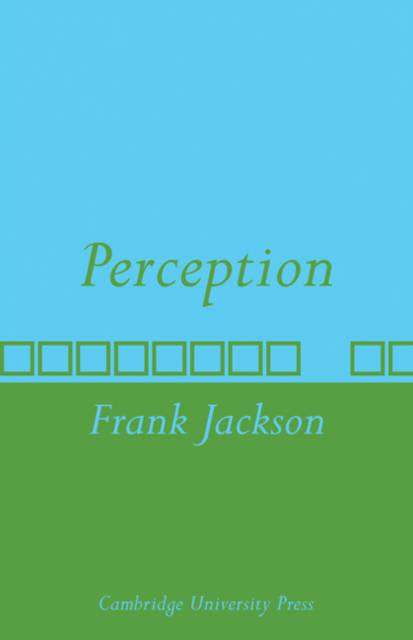
What is the nature of, and what is the relationship between, external objects and our visual perceptual experience of them? In this book, Frank Jackson defends the answers provided by the traditional Representative theory of perception. He argues, among other things that we are never immediately aware of external objects, that they are the causes of our perceptual experiences and that they have only the primary qualities. In the course of the argument, sense data and the distinction between mediate and immediate perception receive detailed defences and the author criticises attempts to reduce perceiving the believing and to show that the Representative theory makes the external world unknowable. Jackson recognises that his views are unfashionable but argues in detail that they are to be preferred to their currently favoured competitors. It will become an obvious point of reference for all future work on the philosophy of perception.
Specificaties
Betrokkenen
- Auteur(s):
- Uitgeverij:
Inhoud
- Aantal bladzijden:
- 192
- Taal:
- Engels
Eigenschappen
- Productcode (EAN):
- 9780521107945
- Verschijningsdatum:
- 5/03/2009
- Uitvoering:
- Paperback
- Formaat:
- Trade paperback (VS)
- Afmetingen:
- 140 mm x 216 mm
- Gewicht:
- 249 g


Alleen bij Standaard Boekhandel
+ 158 punten op je klantenkaart van Standaard Boekhandel
Cadeau

AANGERADEN


Beoordelingen
We publiceren alleen reviews die voldoen aan de voorwaarden voor reviews. Bekijk onze voorwaarden voor reviews.