


- Afhalen na 1 uur in een winkel met voorraad
- Gratis thuislevering in België vanaf € 30
- Ruim aanbod met 7 miljoen producten
- Afhalen na 1 uur in een winkel met voorraad
- Gratis thuislevering in België vanaf € 30
- Ruim aanbod met 7 miljoen producten





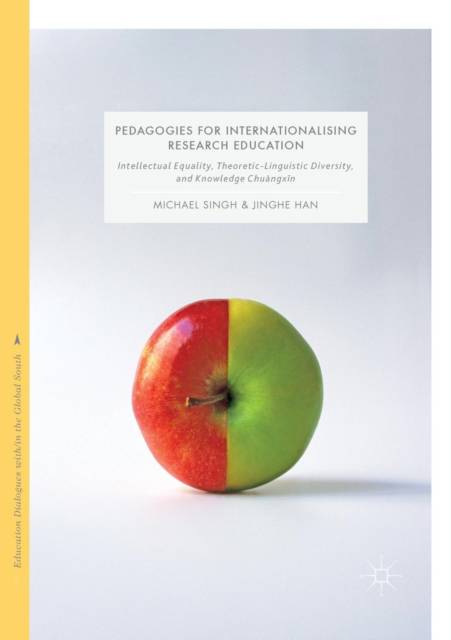
Pedagogies for Internationalising Research Education
Intellectual Equality, Theoretic-Linguistic Diversity and Knowledge Chuàngxīn
Michael Singh, Jinghe Han
€ 167,95
+ 335 punten
Uitvoering
Omschrijving
This book explores pedagogical concepts, metaphors and images of non-white, non-western researchers and research students on the inter/nationalization of education. Specifically, this book draws on the intellectual resources of China and India to explore the pedagogical dynamics and dimensions of the localization/globalization of education with non-Western characteristics. It introduces theoretic-linguistic non-Western concepts from the Tamil, Sanskrit and Chinese languages for use in Western, English-only education and redefines the intellectual basis for internationalising education.
Debating whether 'international education' is Western-centric in terms of its privileging and promotion of Euro-American theoretical knowledge, this book contends that the internationalisation of Western-centric education can benefit from the intellectual power and powerfully relevant theorising performed by non-Western international students. It formulates a democratic vision for the internationalisation of education, with the potential to create transnational solidarity and constitute a forum for mobilising debates about global knowledge and power structures. It also provides key tools to use non-Western theoretic-linguistic tools and modes of critique in research undertaken in Anglophone Western universities.
Debating whether 'international education' is Western-centric in terms of its privileging and promotion of Euro-American theoretical knowledge, this book contends that the internationalisation of Western-centric education can benefit from the intellectual power and powerfully relevant theorising performed by non-Western international students. It formulates a democratic vision for the internationalisation of education, with the potential to create transnational solidarity and constitute a forum for mobilising debates about global knowledge and power structures. It also provides key tools to use non-Western theoretic-linguistic tools and modes of critique in research undertaken in Anglophone Western universities.
Specificaties
Betrokkenen
- Auteur(s):
- Uitgeverij:
Inhoud
- Aantal bladzijden:
- 250
- Taal:
- Engels
- Reeks:
Eigenschappen
- Productcode (EAN):
- 9789811095184
- Verschijningsdatum:
- 24/06/2018
- Uitvoering:
- Paperback
- Formaat:
- Trade paperback (VS)
- Afmetingen:
- 148 mm x 210 mm
- Gewicht:
- 326 g


Alleen bij Standaard Boekhandel
+ 335 punten op je klantenkaart van Standaard Boekhandel
Cadeau

AANGERADEN


Beoordelingen
We publiceren alleen reviews die voldoen aan de voorwaarden voor reviews. Bekijk onze voorwaarden voor reviews.