


- Afhalen na 1 uur in een winkel met voorraad
- Gratis thuislevering in België vanaf € 30
- Ruim aanbod met 7 miljoen producten
- Afhalen na 1 uur in een winkel met voorraad
- Gratis thuislevering in België vanaf € 30
- Ruim aanbod met 7 miljoen producten





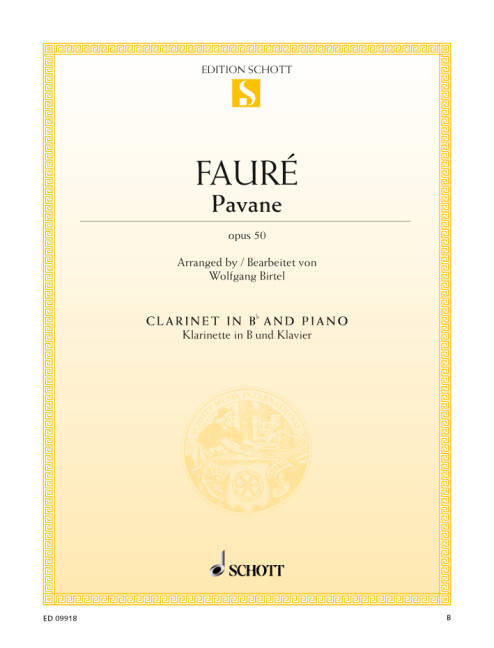
Pavane
op. 50. clarinet in Bb and piano.
€ 7,50
+ 15 punten
Eenvoudig bestellen
Veilig betalen


Gratis thuislevering vanaf € 30 (via bpost)
Gratis levering in je Standaard Boekhandel
Omschrijving
The music of small forms and of chamber-music instrumentations was to become the focus of the French composer Gabriel Fauré (1845–1924). In 1874, after many years spent in the 'provinces', the teacher of Camille Saint-Saëns took the position of organist in Paris; later he not only worked as a church musician but also as a teacher. In the summer of 1887 Fauré wrote his Pavane opus 50, originally intended for a concert providing light entertainment, which soon gained wide popularity as an orchestral setting without and with the chorus added by Fauré. The romantic, slightly melancholy melody is a catchy tune which, thanks to the present arrangement, can now also be performed soloistically with piano accompaniment.
Instrumentation:
clarinet in Bb and piano
op. 50
Instrumentation:
clarinet in Bb and piano
op. 50
Specificaties
Betrokkenen
- Uitgeverij:
Inhoud
- Aantal bladzijden:
- 12
Eigenschappen
- Productcode (EAN):
- 9790001179119
- Verschijningsdatum:
- 1/01/2000
- Afmetingen:
- 231 mm x 303 mm
- Gewicht:
- 61 g

Alleen bij Standaard Boekhandel
+ 15 punten op je klantenkaart van Standaard Boekhandel
CADEAU

AANGERADEN


Beoordelingen
We publiceren alleen reviews die voldoen aan de voorwaarden voor reviews. Bekijk onze voorwaarden voor reviews.