


- Afhalen na 1 uur in een winkel met voorraad
- Gratis thuislevering in België vanaf € 30
- Ruim aanbod met 7 miljoen producten
- Afhalen na 1 uur in een winkel met voorraad
- Gratis thuislevering in België vanaf € 30
- Ruim aanbod met 7 miljoen producten





€ 390,45
+ 780 punten
Omschrijving
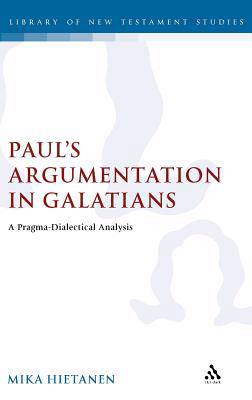
Galatians is a polemical letter which contains a substantial amount of argumentative passages. Paul evidently wanted to persuade by using the best arguments possible to convince his addressees. Using a state-of-the-art method from the discipline of argumentation analysis, Paul's argumentation can be analysed with a precision that standard exegetical methods cannot provide. The pragma-dialectical method developed in Amsterdam facilitates an analysis which is both descriptive and normative. On the one hand, Paul's argumentation can be described, such as the relationship between premisses and conclusions, the structure of the arguments, and features relating to rhetorical strategy. On the other hand, the method makes it possible to evaluate Paul's argumentation against a set of rules for sound reasoning. Fallacies and problematic arguments can be described accurately. The spiritual nature of Paul's matters do not relieve him of rationality, and Paul himself does not argue as if it did. Paul's argumentation is found problematic in several respects. There is a tension in the text: Paul works a great deal to argue his claims while at the same time giving the impression that he merely wants to declare his standpoints and does not want to carry out an argumentation at all. Many of the conclusions are presented as self-evident, even when they are not. Paul's style is far from an ideal model of the resolution of a dispute. Paul relies heavily on an argumentative strategy with maximal use of rhetorical devices. The analysis shows that a contemporary method of argumentation analysis provides tools necessary to adequately describe and understand both individual arguments and the overarching strategy of the argumentation in a Pauline text.
Specificaties
Betrokkenen
- Auteur(s):
- Uitgeverij:
Inhoud
- Aantal bladzijden:
- 232
- Taal:
- Engels
- Reeks:
- Reeksnummer:
- nr. 344
Eigenschappen
- Productcode (EAN):
- 9780567031273
- Verschijningsdatum:
- 26/09/2007
- Uitvoering:
- Hardcover
- Formaat:
- Ongenaaid / garenloos gebonden
- Afmetingen:
- 185 mm x 240 mm
- Gewicht:
- 408 g


Alleen bij Standaard Boekhandel
+ 780 punten op je klantenkaart van Standaard Boekhandel
Cadeau

AANGERADEN


Beoordelingen
We publiceren alleen reviews die voldoen aan de voorwaarden voor reviews. Bekijk onze voorwaarden voor reviews.