



Bedankt voor het vertrouwen het afgelopen jaar! Om jou te bedanken bieden we GRATIS verzending (in België) aan op alles gedurende de hele maand januari.
- Afhalen na 1 uur in een winkel met voorraad
- In januari gratis thuislevering in België
- Ruim aanbod met 7 miljoen producten
Bedankt voor het vertrouwen het afgelopen jaar! Om jou te bedanken bieden we GRATIS verzending (in België) aan op alles gedurende de hele maand januari.
- Afhalen na 1 uur in een winkel met voorraad
- In januari gratis thuislevering in België
- Ruim aanbod met 7 miljoen producten




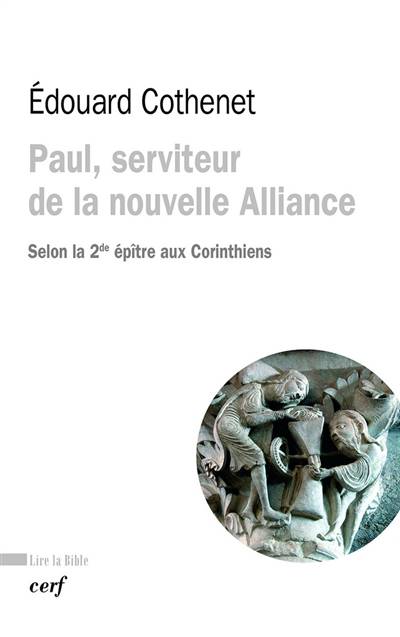
Paul, serviteur de la nouvelle Alliance, selon la seconde épître aux Corinthiens
Edouard Cothenet
Paperback | Frans
€ 18,70
+ 37 punten
Omschrijving
La question des ministères dans l'Église est plus que jamais d'actualité. Le concile Vatican II a bénéficié sur ce point du renouveau des études exégétiques, qui donne lieu à un travail loin d'être achevé. De fait, si la première épître aux Corinthiens et les épîtres pastorales ont fait l'objet de nombreuses études, c'est la seconde épître aux Corinthiens — trop peu remarquée — qui montre le mieux comment Paul a exercé sa tâche de « ministre de la nouvelle Alliance », contrant pied à pied ceux qu'il dénonce comme de « faux apôtres ». À la mystique de la gloire, Paul oppose celle de la participation à la faiblesse du Christ, afin que jaillisse la Vie. Ce faisant, l'Apôtre nous livre le secret de sa vie apostolique : transmettre le trésor de l'Évangile dans le dépouillement du service, sous l'action de l'Esprit-Saint. Il se donne tout entier, sans dissimuler son anxiété, son zèle jaloux ou sa joie débordante, ni sa confiance en ses compagnons. La seconde épître aux Corinthiens frappe par son humanité, qui encourage au quotidien les Églises à surmonter les éternelles difficultés qu'elles rencontrent. Une parole, sur laquelle s'appuie saint Paul, se détache singulièrement : « Ma grâce te suffit ma puissance donne toute sa mesure dans la faiblesse (2 Co 12, 9). Avec pédagogie et érudition, le père Cothenet offre ici une étude biblique nourrissante pour la vie ecclésiale. Il ouvre aussi le regard sur la Tradition et les commentaires des Pères, notamment saint Jean Chrysostome.
--
The question of the Church ministry has never been more topical. On this point of renewal, the Vatican II Council benefitted from exegetical studies that sparked off work still largely unfinished. In fact, although the First Epistle to the Corinthians and the pastoral epistles were extensively studied, it is the Second Epistle to the Corinthians — too little heeded— that best shows how Paul carried out his task as a ‘minister of the new Alliance', methodically countering those he called ‘false prophets'. To the mysticism of glory, Paul opposes that of participation in Christ's weakness, in order that Life may shine forth. In so doing, the Apostle reveals to us the secret of his apostolic life: to transmit the treasure of the Gospel in the austerity of service, under the aegis of the Holy Spirit. He gives himself entirely, without hiding his anxiety, his jealous zeal and his exuberant joy, and his faith in his companions. The Second Epistle to the Corinthians strikes us with its humanity, which encourages Churches to overcome the eternal problems they encounter on a daily basis. One word, on which Saint Paul relies heavily, stands out distinctly: ‘My grace is sufficient for thee: for my strength is made perfect in weakness.' (2 Co 12, 9). With pedagogical skill and erudition, Father Cothenet brings us a biblical study that will nourish ecclesial life. He opens our eyes to Tradition and the commentaries of the Fathers, especially St. John Chrysostom.
--
The question of the Church ministry has never been more topical. On this point of renewal, the Vatican II Council benefitted from exegetical studies that sparked off work still largely unfinished. In fact, although the First Epistle to the Corinthians and the pastoral epistles were extensively studied, it is the Second Epistle to the Corinthians — too little heeded— that best shows how Paul carried out his task as a ‘minister of the new Alliance', methodically countering those he called ‘false prophets'. To the mysticism of glory, Paul opposes that of participation in Christ's weakness, in order that Life may shine forth. In so doing, the Apostle reveals to us the secret of his apostolic life: to transmit the treasure of the Gospel in the austerity of service, under the aegis of the Holy Spirit. He gives himself entirely, without hiding his anxiety, his jealous zeal and his exuberant joy, and his faith in his companions. The Second Epistle to the Corinthians strikes us with its humanity, which encourages Churches to overcome the eternal problems they encounter on a daily basis. One word, on which Saint Paul relies heavily, stands out distinctly: ‘My grace is sufficient for thee: for my strength is made perfect in weakness.' (2 Co 12, 9). With pedagogical skill and erudition, Father Cothenet brings us a biblical study that will nourish ecclesial life. He opens our eyes to Tradition and the commentaries of the Fathers, especially St. John Chrysostom.
Specificaties
Betrokkenen
- Auteur(s):
- Uitgeverij:
Inhoud
- Aantal bladzijden:
- 118
- Taal:
- Frans
Eigenschappen
- Productcode (EAN):
- 9782204099608
- Verschijningsdatum:
- 29/08/2013
- Uitvoering:
- Paperback
- Afmetingen:
- 140 mm x 220 mm
- Gewicht:
- 172 g


Alleen bij Standaard Boekhandel
+ 37 punten op je klantenkaart van Standaard Boekhandel
SOLDEN


Beoordelingen
We publiceren alleen reviews die voldoen aan de voorwaarden voor reviews. Bekijk onze voorwaarden voor reviews.