


- Afhalen na 1 uur in een winkel met voorraad
- Gratis thuislevering in België vanaf € 30
- Ruim aanbod met 7 miljoen producten
- Afhalen na 1 uur in een winkel met voorraad
- Gratis thuislevering in België vanaf € 30
- Ruim aanbod met 7 miljoen producten





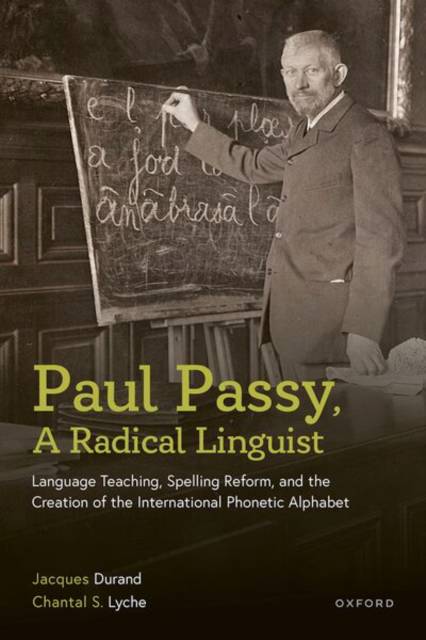
Paul Passy, a Radical Linguist
Language Teaching, Spelling Reform, and the Creation of the International Phonetic Alphabet
Jacques Durand, Chantal S Lyche
Hardcover | Engels
€ 158,95
+ 317 punten
Omschrijving
This book provides a comprehensive introduction to the life and work of the French linguist Paul Passy (1859-1940), with a focus on his significant contributions to the fields of linguistics and phonetics. Renowned as a pioneering educator, Passy was the driving force behind the creation of the International Phonetic Alphabet (IPA), which is widely used today in the teaching of modern languages and in phonetic descriptions of the languages of the world. Jacques Durand and Chantal Lyche explore how Passy's advocacy for spelling reform and his promotion of the Direct Method in foreign language teaching were deeply rooted in his social and spiritual commitments as a Christian socialist. The chapters also shed light on the influence that contemporary British linguists such as Alexander Melville Bell, Alexander John Ellis, Isaac Pitman, and Henry Sweet had on his thought, as well as on his later productive collaboration with Daniel Jones in the creation of the International Phonetic Alphabet. Durand and Lyche's close examination of Passy's scholarly and pedagogical output reveals a visionary figure whose legacy continues to resonate in modern descriptive and applied linguistics.
Specificaties
Betrokkenen
- Auteur(s):
- Uitgeverij:
Inhoud
- Aantal bladzijden:
- 336
- Taal:
- Engels
Eigenschappen
- Productcode (EAN):
- 9780198929857
- Verschijningsdatum:
- 23/10/2026
- Uitvoering:
- Hardcover
- Formaat:
- Genaaid
- Afmetingen:
- 156 mm x 234 mm


Alleen bij Standaard Boekhandel
+ 317 punten op je klantenkaart van Standaard Boekhandel
Cadeau

AANGERADEN


Beoordelingen
We publiceren alleen reviews die voldoen aan de voorwaarden voor reviews. Bekijk onze voorwaarden voor reviews.