


- Afhalen na 1 uur in een winkel met voorraad
- Gratis thuislevering in België vanaf € 30
- Ruim aanbod met 7 miljoen producten
- Afhalen na 1 uur in een winkel met voorraad
- Gratis thuislevering in België vanaf € 30
- Ruim aanbod met 7 miljoen producten




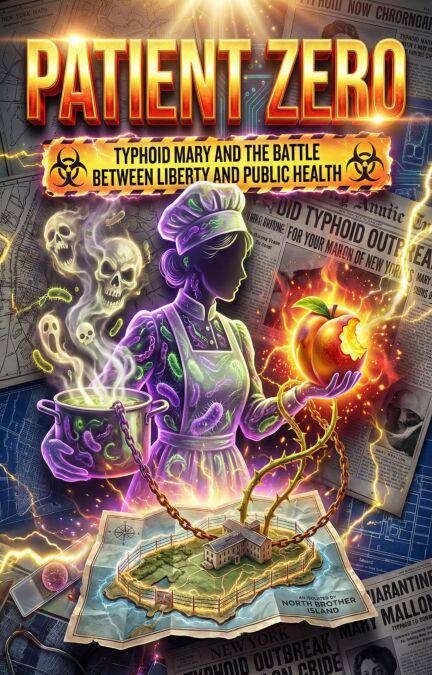
Patient Zero E-BOOK
Typhoid Mary and the Battle Between Liberty and Public Health
Sarah Bell
E-book | Engels
€ 4,99
Omschrijving
Mary Mallon was an Irish immigrant and a fantastic cook. She was also a walking biological weapon. Historian Sarah Bell tells the tragic story of "Patient Zero," better known as Typhoid Mary. Mallon was an asymptomatic carrier of typhoid fever; she felt perfectly healthy, but everywhere she worked, people died.
Bell details the relentless hunt by sanitary engineer George Soper, who tracked the outbreaks to Mary's famous peach ice cream. The book explores the ethical dilemma that followed: The state forcibly quarantined Mary on North Brother Island for decades, treating her like a criminal for a biological condition she didn't believe she had.
"Patient Zero" is a timely examination of the tension between individual civil rights and the safety of the herd. It portrays Mary not just as a villain, but as a victim of a medical system that didn't know how to handle anomalies, condemning a woman to life imprisonment simply for existing.
Bell details the relentless hunt by sanitary engineer George Soper, who tracked the outbreaks to Mary's famous peach ice cream. The book explores the ethical dilemma that followed: The state forcibly quarantined Mary on North Brother Island for decades, treating her like a criminal for a biological condition she didn't believe she had.
"Patient Zero" is a timely examination of the tension between individual civil rights and the safety of the herd. It portrays Mary not just as a villain, but as a victim of a medical system that didn't know how to handle anomalies, condemning a woman to life imprisonment simply for existing.
Specificaties
Betrokkenen
- Auteur(s):
- Uitgeverij:
Inhoud
- Aantal bladzijden:
- 145
- Taal:
- Engels
Eigenschappen
- Productcode (EAN):
- 9783565221271
- Verschijningsdatum:
- 2/02/2026
- Uitvoering:
- E-book
- Formaat:
- ePub


Alleen bij Standaard Boekhandel
AANGERADEN


Beoordelingen
We publiceren alleen reviews die voldoen aan de voorwaarden voor reviews. Bekijk onze voorwaarden voor reviews.