


- Afhalen na 1 uur in een winkel met voorraad
- Gratis thuislevering in België vanaf € 30
- Ruim aanbod met 7 miljoen producten
- Afhalen na 1 uur in een winkel met voorraad
- Gratis thuislevering in België vanaf € 30
- Ruim aanbod met 7 miljoen producten





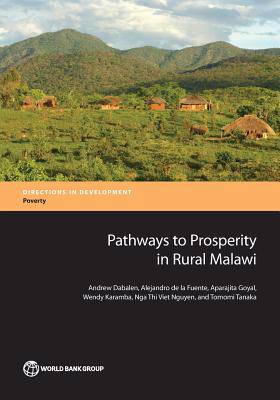
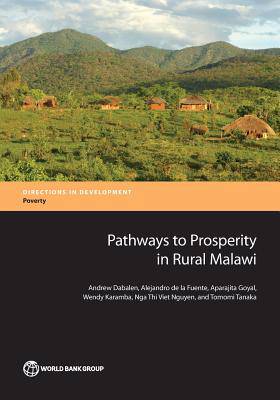
Pathways to Prosperity in Rural Malawi
Andrew Dabalen, Alejandro de la Fuente, Aparajita Goyal, Wendy Karamba, Nga Thi Viet Nguyen, Tomomi Tanaka
€ 56,45
+ 112 punten
Omschrijving
By most accounts, rural Malawi has lacked dynamism in the past decade. Growth has been mostly volatile, in large part due to unstable macroeconomic fundamentals evidenced by high inflation, fiscal deficits, and interest rates. When rapid economic growth has materialized, the gains have not always reached the poorest. Poverty remains high and the rural poor face significant challenges in consistently securing enough food. Several factors contribute to stubbornly high rural poverty. They include a low-productivity and non-diversified agriculture, macroeconomic and recurrent climatic shocks, limited non-farm opportunities and low returns to such activities, especially for the poor, and poor performance from some of the prominent safety net programs. The Report proposes complementary policy actions that offer a possible path for a more dynamic and prosperous rural economy. The key pillars of this comprise macroeconomic stability, increased productivity in agriculture, faster urbanization, better functioning safety nets, and more inclusive financial markets. Some recommendations call for a reorientation of existing programs such as the Malawi Farm Input Subsidy Program (FISP) and the Malawi Social Action Fund Public Works Program (MASAF-PWP). Others identify promising new areas of intervention, such as the introduction of digital IDs and biometric technologies to enhance the reach of mobile banking and deepen financial inclusion. Finally, and importantly, the report recommends the scaling up of investments on girls' secondary education to curb early child marriage and early child bearing among adolescents. This will empower women at home and work and bend the trajectory of fertility rates in rural areas in order to boost human development and reduce poverty.
Specificaties
Betrokkenen
- Auteur(s):
- Uitgeverij:
Inhoud
- Aantal bladzijden:
- 166
- Taal:
- Engels
- Reeks:
Eigenschappen
- Productcode (EAN):
- 9781464809972
- Verschijningsdatum:
- 1/09/2017
- Uitvoering:
- Paperback
- Formaat:
- Trade paperback (VS)
- Afmetingen:
- 178 mm x 251 mm
- Gewicht:
- 294 g


Alleen bij Standaard Boekhandel
+ 112 punten op je klantenkaart van Standaard Boekhandel
Cadeau

AANGERADEN


Beoordelingen
We publiceren alleen reviews die voldoen aan de voorwaarden voor reviews. Bekijk onze voorwaarden voor reviews.