



Bedankt voor het vertrouwen het afgelopen jaar! Om jou te bedanken bieden we GRATIS verzending (in België) aan op alles gedurende de hele maand januari.
- Afhalen na 1 uur in een winkel met voorraad
- In januari gratis thuislevering in België
- Ruim aanbod met 7 miljoen producten
Bedankt voor het vertrouwen het afgelopen jaar! Om jou te bedanken bieden we GRATIS verzending (in België) aan op alles gedurende de hele maand januari.
- Afhalen na 1 uur in een winkel met voorraad
- In januari gratis thuislevering in België
- Ruim aanbod met 7 miljoen producten





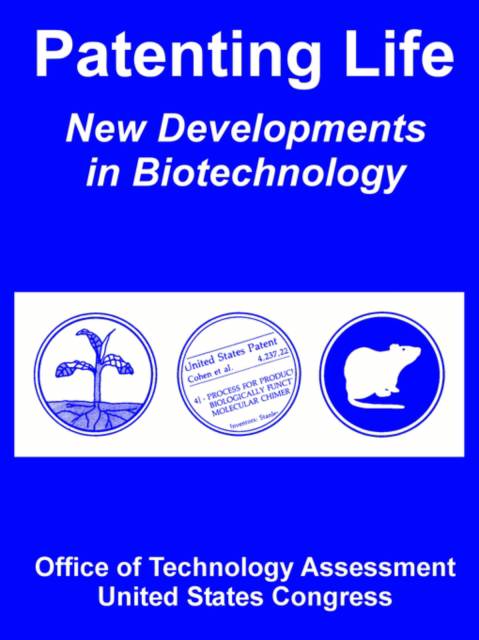
Patenting Life
New Developments in Biotechnology
Office of Technology Assessment, United States Congress
Paperback | Engels
€ 27,45
+ 54 punten
Omschrijving
Since the discovery of recombinant DNA technology in the early 1970s, biotechnology has become an essential tool for many researchers and industries. The potential of biotechnology has spurred the creative genius of inventors seeking to improve the Nation's health, food supply, and environment. In 1980, the Supreme Court ruled that a living micro-organism could be patented. Subsequently, the U. S. Patent and Trademark Office held that certain types of plant and animal life constituted patentable subject matter. This special report, prepared by the Office of Technology Assessment of the United States Congress under, reviews U. S. patent law as it relates to the patentability of micro-organisms, cells, plants, and animals; as well as specific areas of concern, including deposit requirements and international considerations. The report includes a range of options for congressional action related to the patenting of animals, intellectual property protection for plants, and enablement of patents involving biological material.
Specificaties
Betrokkenen
- Auteur(s):
- Uitgeverij:
Inhoud
- Aantal bladzijden:
- 204
- Taal:
- Engels
Eigenschappen
- Productcode (EAN):
- 9781410225672
- Verschijningsdatum:
- 10/08/2006
- Uitvoering:
- Paperback
- Formaat:
- Trade paperback (VS)
- Afmetingen:
- 210 mm x 279 mm
- Gewicht:
- 471 g


Alleen bij Standaard Boekhandel
+ 54 punten op je klantenkaart van Standaard Boekhandel
SOLDEN


Beoordelingen
We publiceren alleen reviews die voldoen aan de voorwaarden voor reviews. Bekijk onze voorwaarden voor reviews.