


- Afhalen na 1 uur in een winkel met voorraad
- Gratis thuislevering in België vanaf € 30
- Ruim aanbod met 7 miljoen producten
- Afhalen na 1 uur in een winkel met voorraad
- Gratis thuislevering in België vanaf € 30
- Ruim aanbod met 7 miljoen producten





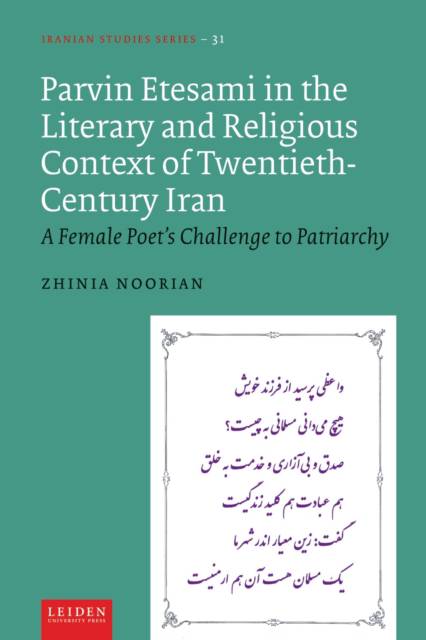
Parvin Etesami in the Literary and Religious Context of Twentieth-Century Iran
A Female Poet's Challenge to Patriarchy
Zhinia Noorian
€ 117,00
+ 234 punten
Omschrijving
Parvin E'tesami (1907-1941) is among the few Persian female poets, who has gained nationwide popularity, while her authorship was disbelieved. She is celebrated in a plethora of publications every year in Iran and beyond. E'tesami is the only female poet who has remained part of the daily lives of people in her society for about a century. Her poetry appears in school curricula both before and after the Revolution of 1979. People use her poetry on social media, particularly in critical times. It is also used in public speeches by Ali Khamenei (r. 1989-present) the supreme leader of the Islamic Republic. This book engages with E'tesami in the transformational context of the early twentieth century in Iran to investigate the controversies around her identity as a popular female poet. It demonstrates that the reason for E'tesami's paradoxical popularity was not merely her gender, but the transgression of patriarchal Iranian-Muslim gender norms.
Specificaties
Betrokkenen
- Auteur(s):
- Uitgeverij:
Inhoud
- Aantal bladzijden:
- 262
- Taal:
- Engels
- Reeks:
- Reeksnummer:
- nr. 31
Eigenschappen
- Productcode (EAN):
- 9789087284121
- Verschijningsdatum:
- 1/08/2023
- Uitvoering:
- Hardcover
- Formaat:
- Genaaid
- Afmetingen:
- 156 mm x 235 mm
- Gewicht:
- 564 g


Alleen bij Standaard Boekhandel
+ 234 punten op je klantenkaart van Standaard Boekhandel
Cadeau

AANGERADEN


Beoordelingen
We publiceren alleen reviews die voldoen aan de voorwaarden voor reviews. Bekijk onze voorwaarden voor reviews.