


- Afhalen na 1 uur in een winkel met voorraad
- Gratis thuislevering in België vanaf € 30
- Ruim aanbod met 7 miljoen producten
- Afhalen na 1 uur in een winkel met voorraad
- Gratis thuislevering in België vanaf € 30
- Ruim aanbod met 7 miljoen producten





Omschrijving
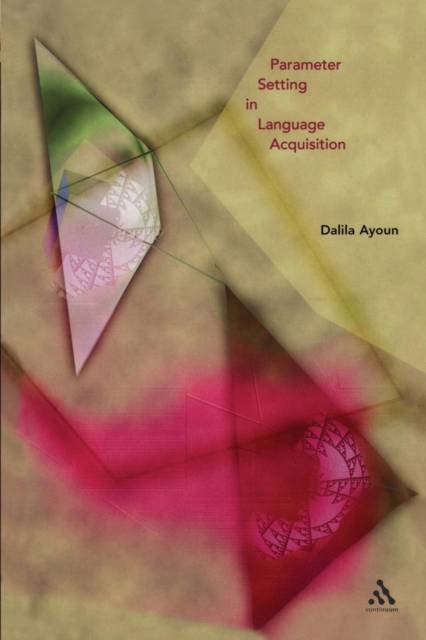
This book provides a broad overview of parameter-setting theory in first and second language acquisition and refines the theory by revisiting and challenging the traditional assumptions that underlie it, based on cross-linguistic language data that cover a range of syntactic and phonological phenomena.
From an historical perspective on parameter-setting theory to an introduction to its role in computational linguistics, neurolinguistics, and language change, the reader will find a critique of the most commonly made arguments, as well as an index of all the syntactic, phonological, lexical, and morphological parameters presented in the literature to date. A closer look at the theory itself addresses the following questions: What does a parameter-setting approach to language acquisition entail? What are the underpinnings of the theory? What issues and problems remain to be solved?
The empirical studies carried out to test the null subject parameter and verb movement parameter are reviewed to re-examine long-standing theoretical assumptions as well as the learnability implications for first and second language acquisition.
From an historical perspective on parameter-setting theory to an introduction to its role in computational linguistics, neurolinguistics, and language change, the reader will find a critique of the most commonly made arguments, as well as an index of all the syntactic, phonological, lexical, and morphological parameters presented in the literature to date. A closer look at the theory itself addresses the following questions: What does a parameter-setting approach to language acquisition entail? What are the underpinnings of the theory? What issues and problems remain to be solved?
The empirical studies carried out to test the null subject parameter and verb movement parameter are reviewed to re-examine long-standing theoretical assumptions as well as the learnability implications for first and second language acquisition.
Specificaties
Betrokkenen
- Auteur(s):
- Uitgeverij:
Inhoud
- Aantal bladzijden:
- 224
- Taal:
- Engels
Eigenschappen
- Productcode (EAN):
- 9780826476074
- Verschijningsdatum:
- 29/04/2005
- Uitvoering:
- Paperback
- Formaat:
- Trade paperback (VS)
- Afmetingen:
- 161 mm x 233 mm
- Gewicht:
- 408 g



Alleen bij Standaard Boekhandel
+ 407 punten op je klantenkaart van Standaard Boekhandel
Wedstrijd


Beoordelingen
We publiceren alleen reviews die voldoen aan de voorwaarden voor reviews. Bekijk onze voorwaarden voor reviews.