



Bedankt voor het vertrouwen het afgelopen jaar! Om jou te bedanken bieden we GRATIS verzending (in België) aan op alles gedurende de hele maand januari.
- Afhalen na 1 uur in een winkel met voorraad
- In januari gratis thuislevering in België
- Ruim aanbod met 7 miljoen producten
Bedankt voor het vertrouwen het afgelopen jaar! Om jou te bedanken bieden we GRATIS verzending (in België) aan op alles gedurende de hele maand januari.
- Afhalen na 1 uur in een winkel met voorraad
- In januari gratis thuislevering in België
- Ruim aanbod met 7 miljoen producten





€ 72,59
+ 145 punten
Omschrijving
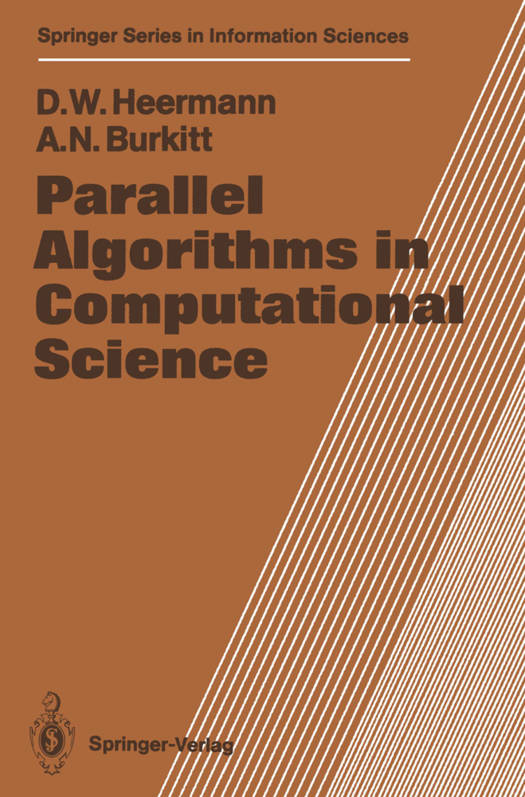
Our aim in this book is to present and enlarge upon those aspects of parallel computing that are needed by practitioners of computational science. Today al- most all classical sciences, such as mathematics, physics, chemistry and biology, employ numerical methods to help gain insight into nature. In addition to the traditional numerical methods, such as matrix inversions and the like, a whole new field of computational techniques has come to assume central importance, namely the numerical simulation methods. These methods are much less fully developed than those which are usually taught in a standard numerical math- ematics course. However, they form a whole new set of tools for research in the physical sciences and are applicable to a very wide range of problems. At the same time there have been not only enormous strides forward in the speed and capability of computers but also dramatic new developments in computer architecture, and particularly in parallel computers. These improvements offer exciting prospects for computer studies of physical systems, and it is the new techniques and methods connected with such computer simulations that we seek to present in this book, particularly in the light of the possibilities opened up by parallel computers. It is clearly not possible at this early stage to write a definitive book on simulation methods and parallel computing.
Specificaties
Betrokkenen
- Auteur(s):
- Uitgeverij:
Inhoud
- Aantal bladzijden:
- 183
- Taal:
- Engels
- Reeks:
- Reeksnummer:
- nr. 24
Eigenschappen
- Productcode (EAN):
- 9783642762673
- Verschijningsdatum:
- 8/12/2011
- Uitvoering:
- Paperback
- Formaat:
- Trade paperback (VS)
- Afmetingen:
- 156 mm x 234 mm
- Gewicht:
- 285 g


Alleen bij Standaard Boekhandel
+ 145 punten op je klantenkaart van Standaard Boekhandel
SOLDEN


Beoordelingen
We publiceren alleen reviews die voldoen aan de voorwaarden voor reviews. Bekijk onze voorwaarden voor reviews.